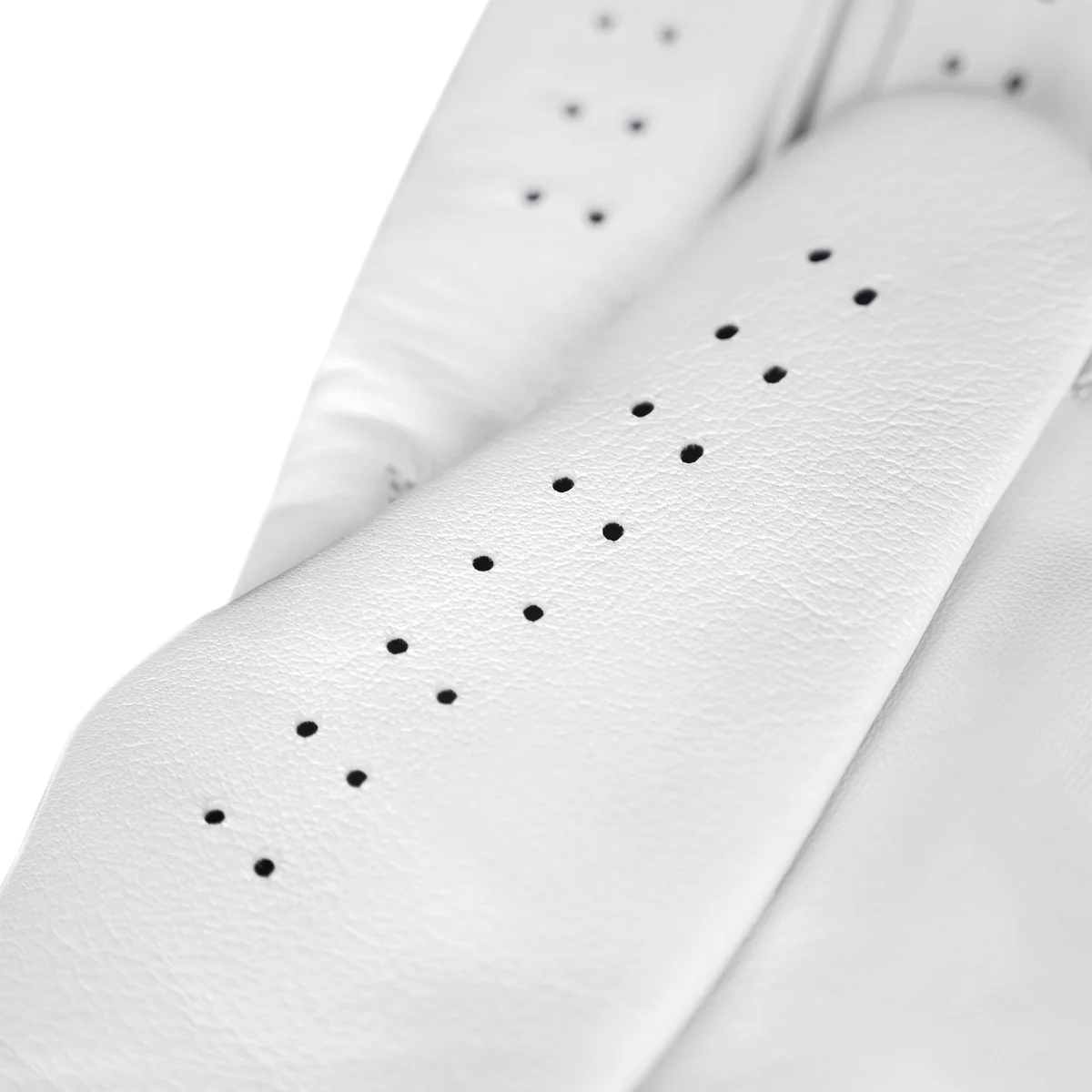
A thin Cabretta golf glove starts with a material specification and suitable raw hides. At Texpak, we commonly prepare golf glove leather at approximately 0.4–0.5 millimetres. Some customers request approximately 0.5–0.6 millimetres instead. These are our usual project ranges, rather than a single thickness requirement for every Cabretta glove.
For a brand, thickness belongs alongside softness, fit and strength in the development brief. Choosing the thinnest option on paper does not settle how the finished glove will feel or perform.
What does the thickness figure tell a buyer?
A thickness range describes one part of the leather specification. It gives the tannery and brand a dimension to discuss and compare during development.
It does not, by itself, describe hide quality, softness, stretch or the finished construction. Two gloves with a similar thickness can therefore still feel different.
Explain the intended product experience when you request a range. A physical reference glove is particularly helpful if your preference is difficult to express numerically. We can discuss the reference alongside the material, pattern and finished sample.
Raw-hide selection comes before the final thickness
From our tannery experience, choosing appropriate raw hides is central to achieving the feel and strength required for a thin glove. The material decision begins before the leather is brought to the requested thickness.
We assess thickness and visible marks when evaluating hides, and conduct leather strength checks as part of our process. The aim is to select and prepare material suited to the product brief.
We personally favour carefully selected African hides for their combination of soft feel and tear-strength characteristics in our work. That is our sourcing experience, rather than a ranking of every hide from one continent against another. Read our leather-origin article for the fuller discussion.
How does a request for thinner leather change production?
At Texpak, a thinner specification changes how we prepare the leather in the tannery. It is not simply a description added to an otherwise unchanged material order.
We own the tannery and can work through leather preparation as part of the glove project. Agree the requested thickness range and assess the resulting sample for feel and suitability before approving bulk production.
If thickness changes after an earlier sample has been approved, review the revised material in a new sample. An earlier approval describes the product that was actually assessed.
Ask about tensile and tear strength separately
Texpak performs both tensile- and tear-strength tests. They are separate assessments, so a buyer should ask which result is being discussed instead of using “strength” as a catch-all description.
ISO's public standards descriptions illustrate the distinction: ISO 3376 concerns tensile strength and elongation, while ISO 3377-2 concerns a double-edge tear test. These references explain different test categories; a project's actual method and acceptance criteria must be confirmed with us.
For a meaningful discussion, identify the material being assessed, its thickness range, the test method and the agreed requirement. We are not publishing numerical test results or claiming a particular ISO test method here.
Compare Cabretta and synthetic options on the actual brief
Cabretta is our premium-feel option. In our experience, suitable synthetic materials can be thinner while maintaining higher strength, but do not reproduce the same leather feel.
Treat that as a reason to compare samples. The question is which material and construction suit your brand's intended product. If you want to offer more than one price or material category, assess each option on its own terms rather than assume one specification serves the entire range.
Our materials comparison covers those decisions more broadly.
What should a thin-glove development brief include?
- Preferred material and physical feel reference.
- Requested thickness range in millimetres.
- Target fit, sizes and wearing hands.
- Colour, artwork and construction requirements.
- Any specific testing requirements to agree.
- Approval of a finished sample using the chosen material.
Texpak offers free sample making and revisions, with shipping paid by the customer. Discuss a Cabretta glove project with our manufacturing team to compare a suitable leather specification before committing to production.
Discuss your golf glove project.
Share your design, target market and estimated quantities. We can help with material choices, fit and sample development. Usual inquiry response: 4–8 hours.
Sample making and prototyping are free; customers pay shipping. Typical sample production: 1–2 weeks, with delivery quoted separately.