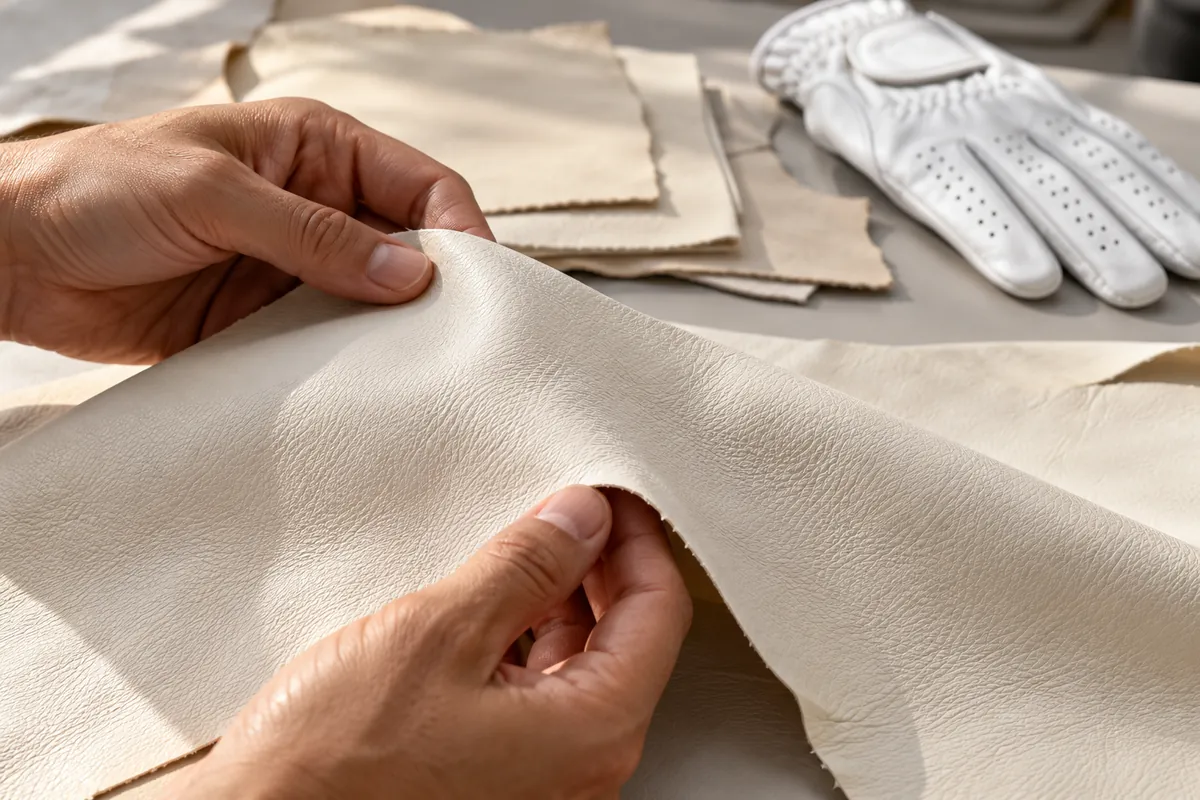
Where leather comes from can influence a golf glove’s feel and performance, but a country name cannot guarantee quality. From our perspective as both a tannery and glove manufacturer, the better approach is to evaluate the actual leather, agree the intended properties and approve a finished glove sample.
Does leather origin determine golf glove quality?
Leather origin is a useful sourcing detail, but it is not a complete quality specification. Two skins from the same country can behave differently, and leather from different sources can sometimes meet the same finished-glove brief. For a golf brand, the practical question is whether the selected material delivers the feel and performance agreed for its glove.
The International Council of Tanners explains that raw-material quality strongly influences finished leather. It identifies surface damage, handling and preservation among the factors that affect hide and skin quality. This is why a source name alone cannot replace an assessment of the material that will actually be processed.
There is also a distinction between where the raw skin originates, where it is tanned and where the glove is manufactured. When discussing origin with a supplier, specify which of those stages you mean.
What we see as a tannery and golf glove manufacturer
At Texpak, our manufacturing unit and leather-processing tannery are based in Sialkot, Pakistan. We prepare leather from raw hides, cut the material and stitch golf gloves in-house. Our view of sourcing therefore begins before the leather reaches the cutting table.
In our manufacturing experience, material from different sources can have different softness, feel and strength characteristics. A leather that feels especially supple may be attractive for one brand’s premium glove, while another brief puts more emphasis on resistance to damage. We assess these differences against the glove the customer wants to develop. We also assess thickness and inspect for surface marks or damage, including marks that may have developed during the animal’s life. We look for clean material suitable for the intended glove panels; visual appearance alone is not a veterinary health certification.
For our own golf glove work, we prefer carefully selected African hides because we have found a combination of a very soft feel and good tear strength in the material we choose. This is our sourcing preference, not a ranking of all African leather or a published test result for every shipment.
We avoid promising that every skin from one country will be softer or stronger than every skin from another. A particular source or lot needs to be considered on its own merits. A broad geographical label is too simple a basis for approving a production material.
Softness, thinness and strength are different questions
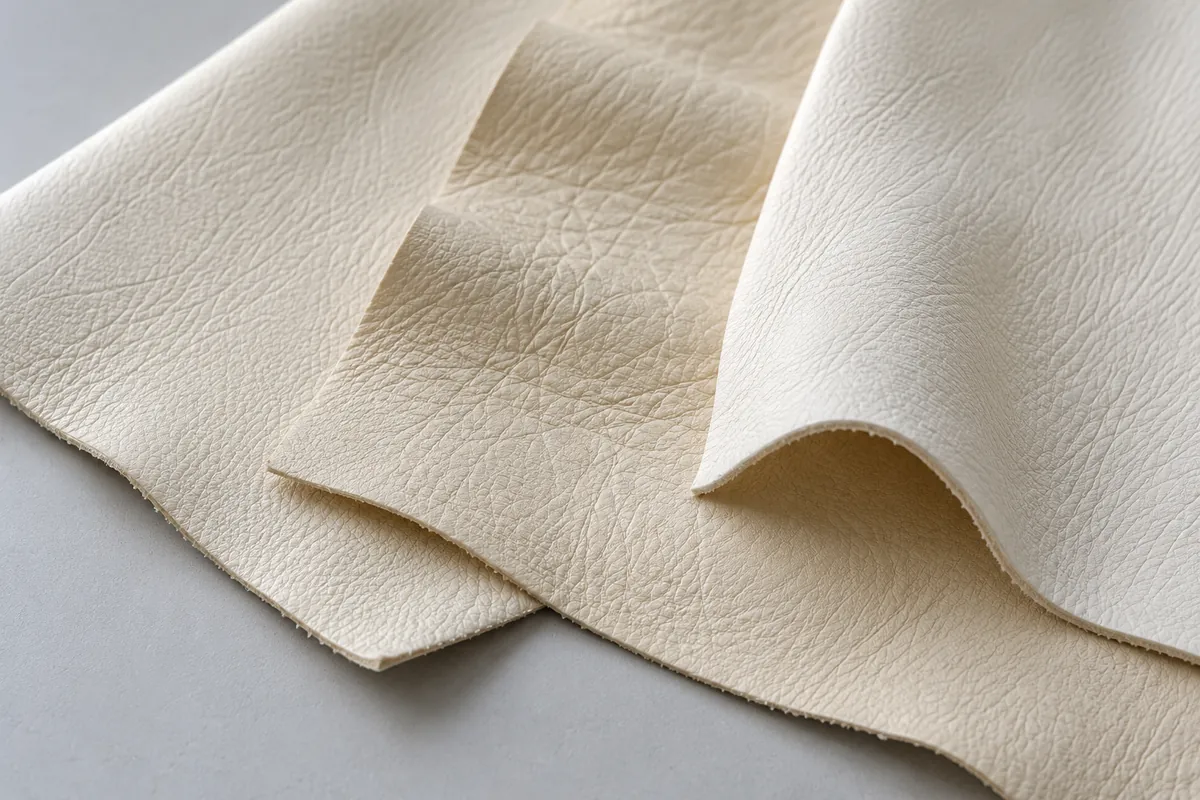
When a buyer says “premium leather,” we first need to understand what premium should mean for that collection. Is the priority a thin, close feel around the hand? A soft surface? A particular fit? A material choice intended to balance feel and durability?
Our experience with Cabretta is that it gives the premium feel many brands want. We also manufacture with synthetic leather and synthetic suede, which can offer durability advantages in the styles we make. That does not make one material the right answer for every customer. Our Cabretta versus synthetic golf glove guide explains that broader choice.
For leather sourcing, avoid treating softness as proof of strength. Also, tensile strength and tear resistance are different properties: a result for one should not be described as a result for the other. At our tannery, we conduct tensile-strength testing on the leather we make. We do not publish unverified tear-test figures or claim that one test establishes the glove’s entire lifespan.
Why processing and the finished sample matter
The raw material is only the starting point. The German Leather Federation’s overview of leather production describes how processing and the choice of tanning agents are directed toward the intended leather properties. Buying from a preferred origin does not remove the need to agree how the finished material should perform.
A leather swatch can help communicate surface feel, but it cannot show everything about a golf glove. The finished sample lets a brand assess the material alongside the pattern, seams, finger shape and closure. That combination is what its customers will wear.
At Texpak, we test our patterns internally and send custom glove samples to the brand before production. If a brand needs a different fit, we can alter its patterns. Leather choice and fit development should be discussed together; a material description is not a substitute for trying the glove.
What should a golf brand ask before approving leather?
Use the following questions to turn a general sourcing conversation into a usable sample brief:
- What exactly is the material? Confirm the leather type and whether any glove panels will use synthetic materials.
- Which origin are we discussing? Separate the raw skin’s origin from the tanning and glove-manufacturing locations.
- What feel are we targeting? Describe the desired softness, thickness and fit, ideally with a reference glove rather than the word “premium” alone.
- Which properties have actually been tested? Ask what was measured and how the result relates to the agreed material requirements. Do not assume a tensile result is a tear result.
- Can we assess a finished sample? Check the feel on the hand, finger fit, seams and strap closure before approving the specification.
- How will repeat orders be compared? Agree a reference sample and discuss what differences would require review.
These are questions for your supplier, not a claim that every manufacturer follows the same inspection process. Our own confirmed checks include leather tensile-strength testing, print testing and quality checks throughout production. See our OEM golf glove quality-control checklist for the wider discussion.
What about small differences between leather lots?
In our tannery experience, a set recipe helps us aim for a consistent result, but slight differences between natural leather lots can still occur. These may involve color or feel and are often subtle. We will cover batch variation in a separate article; it is a related issue rather than evidence that a country consistently produces better or worse leather.
For a buyer, the useful step is to discuss consistency against an agreed reference. Natural variation should not become an excuse for a batch that falls outside the specification your brand approved.
Common questions about golf glove leather sourcing
Which country makes the best leather for golf gloves?
There is no useful universal ranking for every glove brief. Consider the actual material, its processing, the properties your brand requires and the finished sample. Ask the supplier to explain its material choice instead of relying on a country name.
Does softer leather automatically mean a better glove?
Softness may be central to a premium-feel glove, but buyers should consider it alongside fit, construction and the strength requirements of their project. A soft sample alone does not establish long-term durability.
Can a brand choose a specific leather source?
You can include an origin preference in your inquiry. Availability, suitability and any supporting sourcing information need to be confirmed for the particular project; they should not be assumed from a general website description.
Develop a leather golf glove around your brand’s brief
If you are planning a private-label collection, send us your design, intended market, material preference and a clear description of the feel you want. We can discuss those requirements through our OEM and Private Label golf glove service and develop a sample before production.
Samples are free, with sample scope and shipping arrangements confirmed directly. Typical sample development takes 1–2 weeks. Request a golf glove sample or email sales@ecotexpak.com to discuss your project.
Manufacturing observations in this article come from Texpak’s tannery and glove-production experience. External references provide general leather-industry background; they are not test reports for Texpak materials.