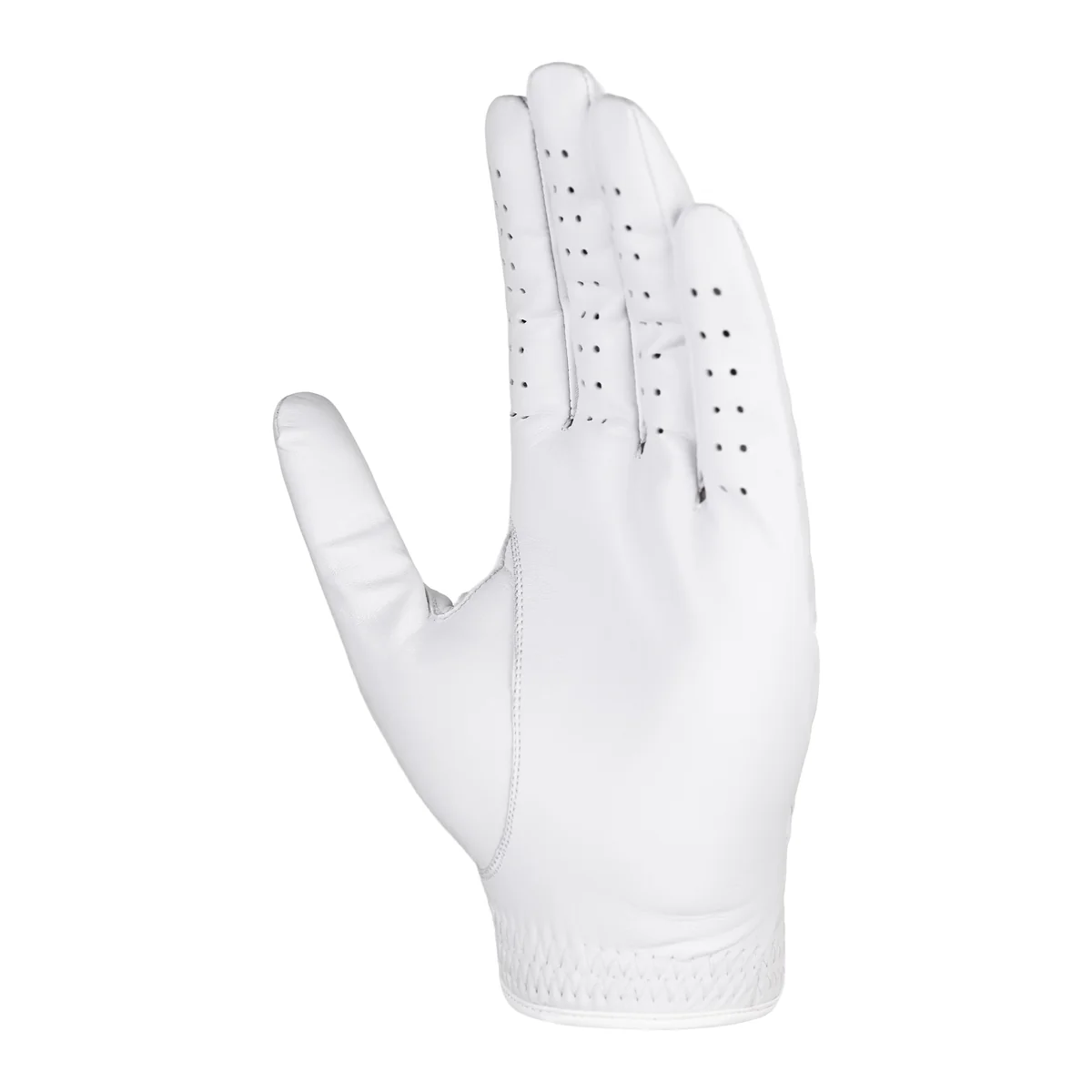
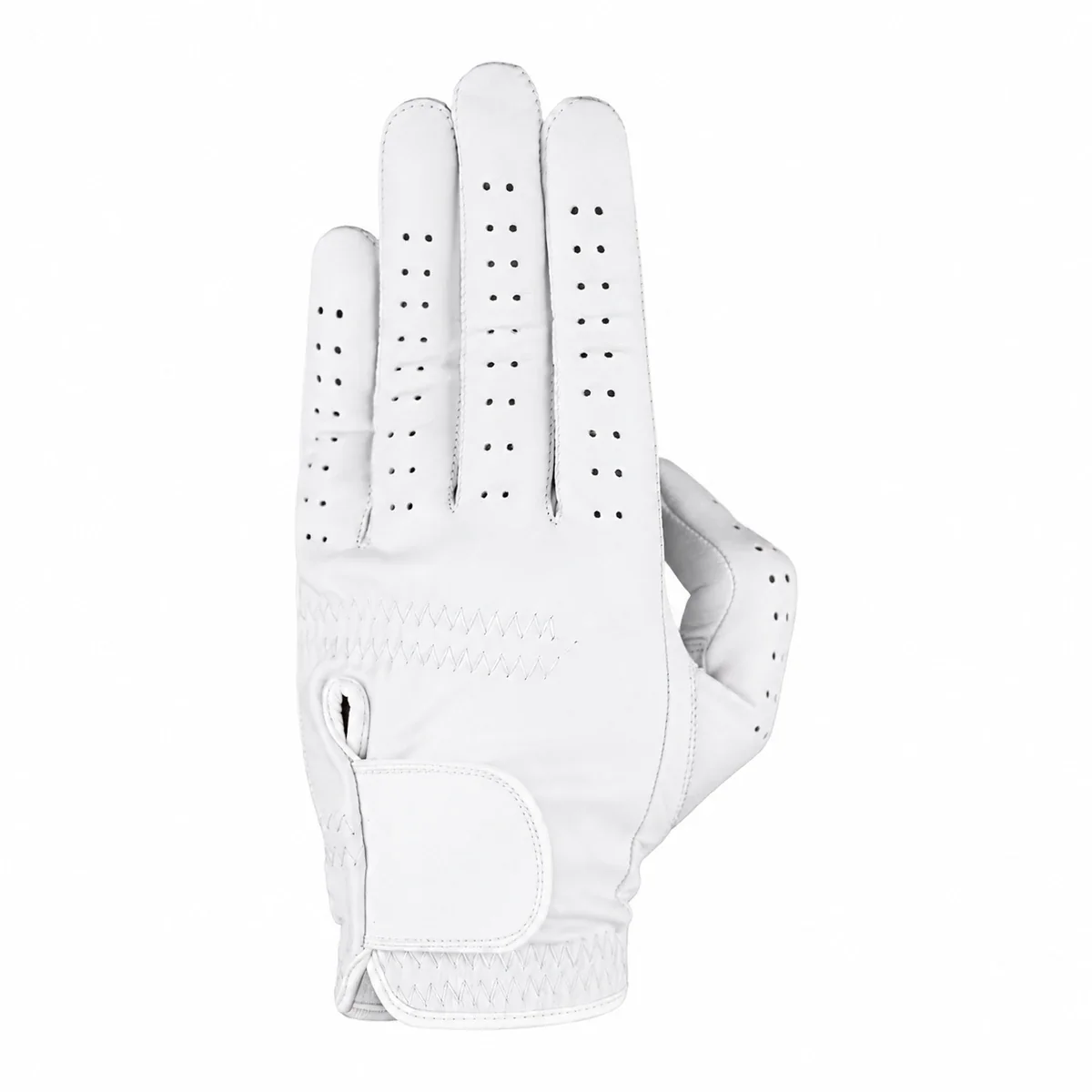
A private-label golf glove range needs a fit specification as well as size labels. Texpak manufactures men's, women's, cadet and junior gloves, using regional starting patterns and adjustments agreed for each brand.
The first question is who will wear the product. The next is how the approved sample will represent that audience. An owner finding one glove comfortable is useful feedback, but it cannot establish the fit of a complete range on its own.
Separate the fit range from the size label
A label such as medium only has meaning within a particular range and pattern. A men's medium and a women's medium should not be treated as interchangeable measurements.
In Texpak's starting patterns, men's gloves are generally larger and wider than women's gloves. Cadet development addresses different hand proportions: the familiar cadet concept combines shorter fingers with a broader palm relative to a regular cut. FootJoy's fitting guidance illustrates that distinction, although brands' actual dimensions still need to be checked.
Junior is a separate range to discuss, rather than another name for cadet. Begin by identifying the intended fit range, then agree the size options and their physical references.
Explain the target market
Our starting patterns also differ by region. In our own pattern system, the US men's starting fit is slightly larger than the corresponding European and UK starting fits.
That describes how Texpak develops its products. It is not a universal conversion rule for every glove sold in those markets, or a claim that all people in a country have the same hand proportions.
Tell us where the range will be sold and which customers you want to serve. If the brand already has a fit customers know, a reference sample may provide a more useful starting point than a regional label alone.
Identify which dimension actually needs changing
Palm width is a frequent subject of our sample discussions. A regional starting pattern may be suitable overall while the brand wants a width or length adjustment.
Describe the location of the issue. “Too small” leaves open whether the problem is palm width, finger length, wrist opening or another area. Measurements and marked photographs let the pattern team work on the intended correction.
If you have a glove whose fit you want to use as a benchmark, send the physical sample and explain what you like about it. Keep the material in mind when reviewing the result: a fit comparison should identify the actual construction being approved.
Review a range, rather than one person's hand
In our experience, some small brands request changes mainly to suit the owner or decision-maker. Problems can arise when that preference is assumed to represent the wider customer audience.
A useful review plan includes people from the intended customer group and a clear record of the size and sample they assessed. Look for recurring observations before changing the base pattern.
The aim is to distinguish an individual fit preference from a pattern issue that affects the intended product. Our practical golf glove fit guide can help structure those observations.
Record the approved fit before bulk production
A buyer's fit brief should identify:
- Target market and intended wearer group.
- Men's, women's, cadet or junior range.
- Size range and wearing hands.
- Reference glove or agreed sample identifier.
- Specific dimensional changes requested.
- The version approved for production.
At Texpak, sizing changes require pattern work. Review the revised sample before treating that change as resolved. We retain labelled master samples in customer files so the approved product remains available as a reference.
Our regional sizing standards are proprietary. Project-specific requirements can be discussed directly during development.
Plan the fit alongside the collection
Before choosing quantities, settle which fit ranges the first collection will contain. Then combine that decision with your audience, budget and planned size assortment.
Discuss your golf glove range with Texpak to develop the materials, fit and samples around the customers your brand intends to serve.
Discuss your golf glove project.
Share your design, target market and estimated quantities. We can help with material choices, fit and sample development. Usual inquiry response: 4–8 hours.
Sample making and prototyping are free; customers pay shipping. Typical sample production: 1–2 weeks, with delivery quoted separately.