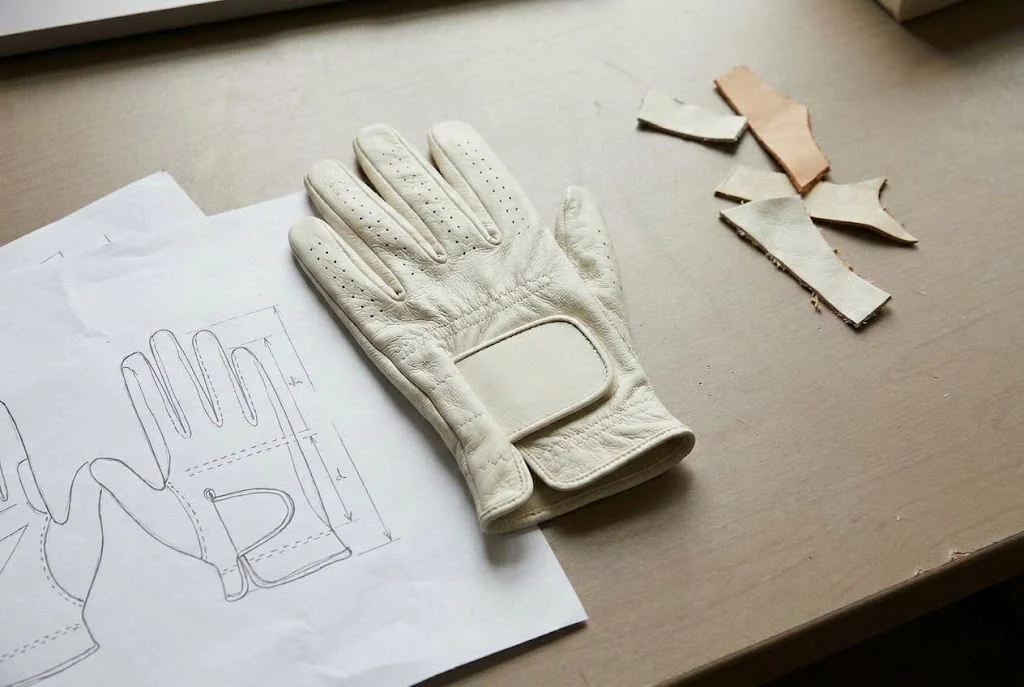
A premium Cabretta range needs more detail than a request for soft leather. An Italian pro shop can specify which panels matter most to the wearer, review the finish and fit on a physical glove, and agree how the manufacturer will compare production with the accepted sample.
Describe the customer and the feel worth preserving
Federgolf’s account of a golf tourism forum in Lombardy identifies a regional network of affiliated clubs and a discussion involving golf, tourism and business representatives. It offers a concrete setting for a pro shop evaluating the product it wants to present to local and visiting players. Participation and club counts give context for the buyer’s brief. The intended range still needs its own evidence. Federgolf’s golf tourism forum report.
Write down the experience the shop wants to sell. If it is a close, soft palm feel, state which material is intended for the palm and what other panels are proposed. Keep this separate from the presentation description and brand artwork. Ask the shop staff which fit and finish questions customers will ask at the counter.
Review the swatch and the finished construction
At Texpak, Cabretta development includes leather selection and the team’s tensile and tear checks. Those checks assess different properties. Ask which relevant results or acceptance evidence can be agreed for the proposed material. A swatch can help choose the finish and hand feel. Use an assembled glove to assess the effect of seams, pattern and closure.
In a separate Texpak development project, a former professional golfer starting a brand asked for leather thinner than our standard specification. Our team advised against that choice, then sent the requested thinner samples alongside standard-thickness gloves made with a snugger pattern. The buyer chose the standard thickness with the adjusted fit. An Italian pro shop can apply the same decision process by comparing identified samples and recording whether the feel it wants comes from the material, the pattern or both. Use the sample approval scope guide to record the decision.
Carry the same reference into the production order
Keep the approved sample, material reference, fit range and pack wording together. Texpak retains approved master samples and checks workmanship through production and before packing. Agree the checks and the review method for the exact project. Use accurate descriptions of what the glove contains, alongside accurate manufacturing information.
At the first receiving check, choose several agreed variants and compare the palm finish, closure position and retail information with the retained approval. If a shade looks different, record the sample and lot references and ask for a comparison under agreed lighting. This gives the shop and factory a specific issue to review.
If the buyer asks for a thinner glove, give the manufacturer the desired feel and thickness reference alongside the relevant strength questions. Texpak’s team has found that suitable stronger leather can support a thinner construction. The material and finished sample still need to be reviewed together for the chosen application.
Bring the target feel, material and first stock plan to Texpak. The OEM quality checklist helps set out the inspection questions and the Cabretta thickness guide explains the material trade-offs.
Related guide for Italy · Golf Glove Bundle Planning for Italian Apparel Brands
Explore Texpak’s private-label golf glove manufacturing for materials, sampling and production options.