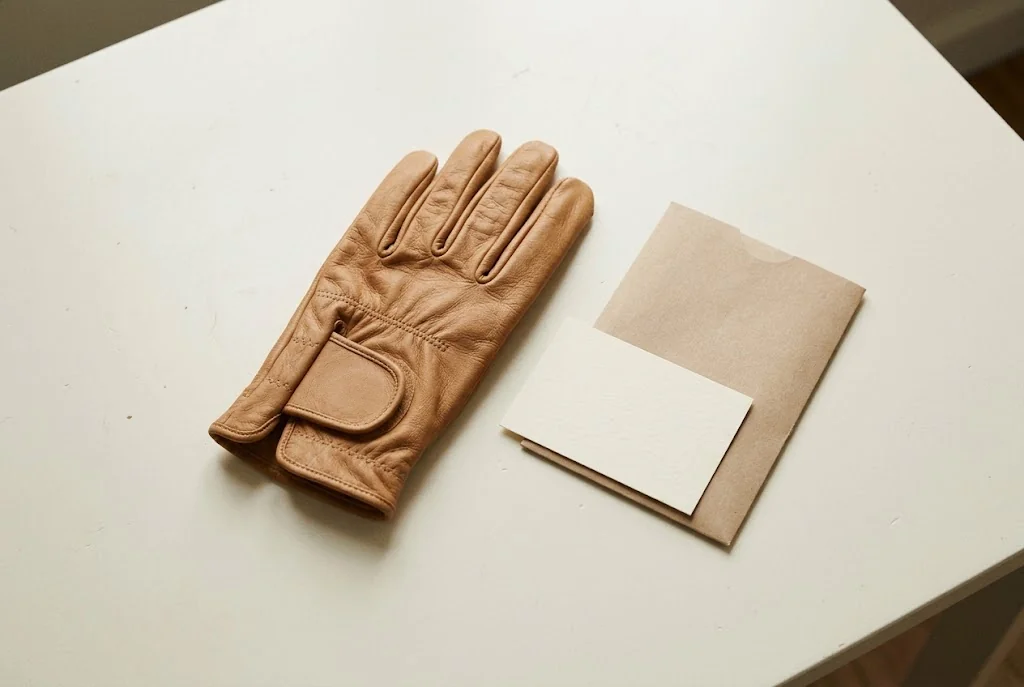
A material swatch can help you discuss the feel or colour of an identified material. It cannot approve the fit, seams or construction of a finished golf glove. Give each sample a clear purpose and record the scope of your decision so a useful early reference does not become an accidental approval of the whole product.
Ask what this particular sample is meant to settle
The word “sample” can describe very different objects: a loose material piece, a development glove, a printed panel or the proposed finished product. Before reviewing one, ask which question it addresses and what is still provisional.
These descriptions are practical categories, not a promise of separate standard Texpak sample packages. The relevant pieces and review sequence depend on the project. A development glove may deliberately retain an earlier colour while the team resolves a fit question; identify that limitation before circulating it internally.
At Texpak, physical custom samples are sent for review and master samples are retained for production comparisons. The tech-pack checklist connects those references with the written product brief. The approval record should identify both the object and the decision.
Use an approval-scope matrix
Keep a short table beside the samples. It should be possible for a colleague who missed the discussion to understand what has been accepted and what remains open.
| Reference being reviewed | Useful question | Keep open unless separately assessed |
|---|---|---|
| Identified material swatch | Does this proposed material merit development for the intended feel or colour? | Finished fit, joining, closure and whole-glove construction. |
| Fit-focused glove | How does this identified pattern fit the intended reviewer? | Any provisional material, print or packaging detail. |
| Print reference on intended material | Does the identified artwork appearance match the review brief? | Unassessed retention, final placement or other product details. |
| Finished proposed glove | Does this version represent the product being considered for approval? | Other sizes, hands, packaging or requirements not represented. |
A scope note can be simple: “Colour direction accepted for this identified swatch; finished glove review remains open.” It should not suggest that a material decision automatically accepts the final fit or every future production lot.
Keep material and version information with the object
Give each reference an identifier, description and date received. Record what the supplier says it represents and any limitations. If two swatches look similar, do not rely on memory to distinguish them. Keep the written labels with the samples when they move between your designer, buyer and product reviewer.
For a mixed construction, establish which panel the material is proposed for. A Cabretta swatch does not establish that every part of the glove is Cabretta. The panel-map guide helps keep those locations explicit.
Colour needs its own reference and context. If a screen photograph and physical swatch seem different, ask which reference is controlling rather than approving the one that looks most attractive on your monitor. Our leather-batch variation guide explains the separate question of slight natural lot differences.
Resolve a partial approval before it spreads
Imagine a fictional brand receiving a swatch and an early glove together. The founder emails “Looks good” after handling the material. A designer interprets that as approval of the logo, while the buyer assumes the whole glove can now be ordered.
The correction is to identify what was actually reviewed: the swatch material, its proposed use and the remaining glove decisions. Ask the manufacturing team to confirm the understood scope. Update the record before placing the order or commissioning final retail copy.
Use the sample-revision process for unresolved changes. Keep accepted details visible without letting a previous informal message overrule a later specific correction.
Close the loop on the finished product
Before final approval, compare the proposed glove with the material, pattern and artwork references it is meant to incorporate. Record any substitutions and confirm whether they need further review. Attach the final sample identifier to the written order specification rather than relying on a folder of unnamed photographs.
Approval and evidence are related but different. Liking a print's appearance does not provide a retention result. Accepting a material feel does not establish a lifespan. The quality-control guide explains the manufacturing-check questions to discuss separately.
Bring your sample questions to the Texpak OEM and private-label service. Explain whether you are choosing materials, resolving fit or reviewing the finished design, so the next physical reference has a clear job.