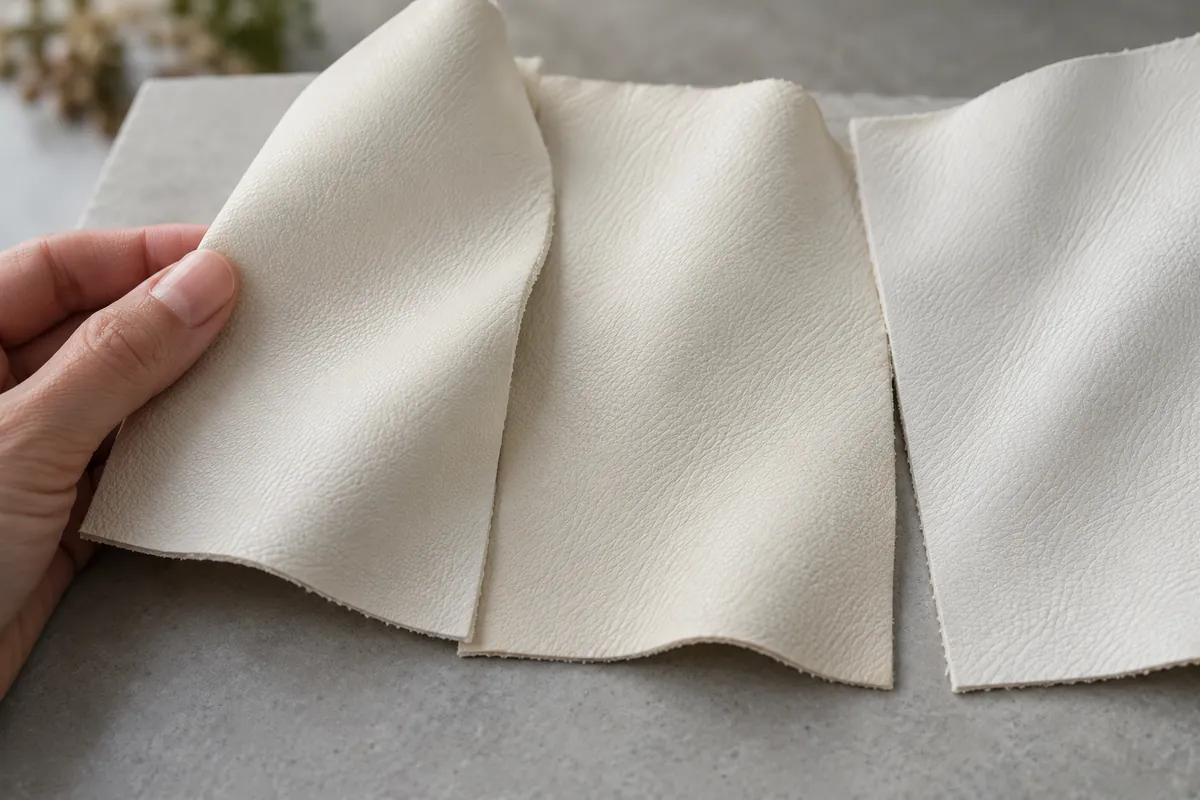
Slight differences in leather color or feel can occur between production lots, even when a tannery follows a set recipe. For a golf brand, the key is understanding the actual difference and comparing it with the agreed sample and specification.
Why can leather vary even when the tannery uses the same recipe?
A tannery recipe sets out a repeatable process. The material going into that process is still natural leather, so following the same recipe does not make every skin identical. At Texpak, we see slight differences between lots even when we are aiming for the same finished result.
This is a practical point for golf brands planning repeat orders. The important question is whether a difference stays within the material and appearance agreed for the glove. “Natural variation” should explain a subtle characteristic, not excuse a batch that misses the agreed specification.
We own a leather-processing tannery and manufacture golf gloves in Sialkot, Pakistan. Preparing leather, cutting it and stitching the gloves in-house lets us consider the material alongside its intended use. This article shares our experience of the small differences buyers may encounter and the questions worth settling before production.
What kinds of differences do we see between leather lots?
In our tannery work, the most familiar lot-to-lot difference is a very minor color variation. Most of the time, customers do not notice it. We still explain it to buyers because completely eliminating every small difference in natural leather is not a realistic expectation.
We control thickness within the required range and work to keep softness consistent. A slight color difference does not mean we accept uncontrolled changes in thickness or a substantially different feel. Grain appearance and stretch can also be discussed where relevant to a brand’s specification, without assuming that a matching color establishes every other property.
A photo can make a subtle difference look larger or smaller than it is. For color comparisons, try to view the materials together in the same light. Separately photographed samples on different phones are a weaker reference than a direct comparison.
The Pantone guidance on physical color samples is useful background: a current physical reference helps when a digital design becomes a physical product. For a leather glove, keep the approved glove or material reference as part of that discussion too.
How is natural variation different from a defect?
Minor variation and an unacceptable difference should not be treated as the same thing. A small change in grain appearance may be acceptable for one project; a visible mismatch that disrupts a brand’s approved design may require review. The decision depends on the actual requirement, not on a blanket rule that all natural marks are acceptable.
Here is a practical way for a buyer to frame the conversation:
| What changed? | What should be compared? | What needs agreement? |
|---|---|---|
| A slight color difference | The material beside the approved physical reference in the same light. | Whether the difference is acceptable for this design and order. |
| A different surface feel | The new material and a finished glove sample. | Whether the softness still meets the intended glove brief. |
| A thickness concern | The material against the project’s specified thickness requirements. | The measurement method and acceptable range, where specified. |
| A visible mark or damage | The affected area and the glove panel it would become. | Whether the material is suitable for that panel. |
Discuss the required thickness range and acceptance criteria for your glove during development. The approved master sample gives those discussions a physical reference.
How we assess the leather for our golf gloves
When selecting leather, we assess thickness and inspect for surface marks or damage. We look for clean material suitable for the glove panels. We also conduct tensile-strength tests on leather made in our tannery, along with quality checks during glove production.
We keep a master copy of the approved sample and use it as the reference for future production. Our checks aim to keep the leather within its specified thickness range and maintain consistent softness, alongside the appearance required for the glove.
If a batch differs too much, we reject it for the intended production and use a different batch. Owning our tannery also means we can prepare a fresh batch to meet the customer’s requirements. We aim to reproduce the approved product consistently while being clear that very minor natural color variation can remain.
Appearance and material performance need separate attention. A close color match does not establish strength, and a tensile result should not be presented as a tear-test result. When discussing a material report, ask which property was tested and which material the result describes.
Our golf glove quality-control guide covers these distinctions. For the wider sourcing question, read how leather origin affects golf glove quality.
What should a brand agree before a repeat order?
A useful reference should be specific enough that both sides know which glove they are discussing. Keep the approved sample, material description, color reference and current design version together. If the brand changes the material or target feel, make that a documented revision rather than an informal comment in a long email chain.
- Identify the reference: name the sample or version that defines the intended result.
- Describe the important attributes: color, feel, thickness and any visible panel requirements.
- Separate preferences from agreed limits: say what needs to match closely and what variation can be discussed.
- Ask how a difference will be handled: establish who reviews it and what approval is needed before proceeding.
- Revisit changes: a new material or revised finish may need a new sample reference.
These steps help avoid the common problem of comparing a new order with a different version from the one the factory understood to be approved. They are especially useful when a brand adds colors or styles after its first collection.
Will a golfer notice a small difference between batches?
In our experience, many of the slight lot-to-lot differences are subtle enough that customers often do not notice them. That observation is not a reason to dismiss a buyer’s concern. If a difference is visible or changes the feel the brand approved, it deserves a clear comparison and discussion.
Do not promise that every glove will be visually identical or that all variation will go unnoticed. A better product description states the material accurately and sets expectations around the actual glove being sold. The finished sample gives the brand a practical reference for its own product information.
Questions about leather batch consistency
Does slight variation mean the tannery changed its recipe?
Not necessarily. In our experience, minor differences can occur between natural leather lots even with a set recipe. Check the actual difference and the production specification before assuming the cause.
Should every difference be accepted because leather is natural?
No. The relevant standard is the material and finish agreed for the glove. A natural characteristic can still be unsuitable for a particular panel or design.
Can a photograph be the only color approval?
A photograph helps communicate, but lighting and display differences can complicate comparison. Discuss a physical reference and the sample-approval approach with the manufacturer.
Does Texpak retain an approved sample for repeat orders?
Yes. We keep a master copy of the approved sample to guide future production. Batches that differ too much are rejected for that production, and another batch or a new tannery batch is used.
What should I send when reporting a batch concern?
Identify the order, sample reference and affected gloves. Describe what differs, include clear comparison photos in the same light and ask for review against the agreed specification. Keep the material and design versions clear.
Planning your first collection or a repeat order? Discuss your leather and sample requirements with Texpak. Our golf glove tech-pack checklist helps you record the details before development begins.