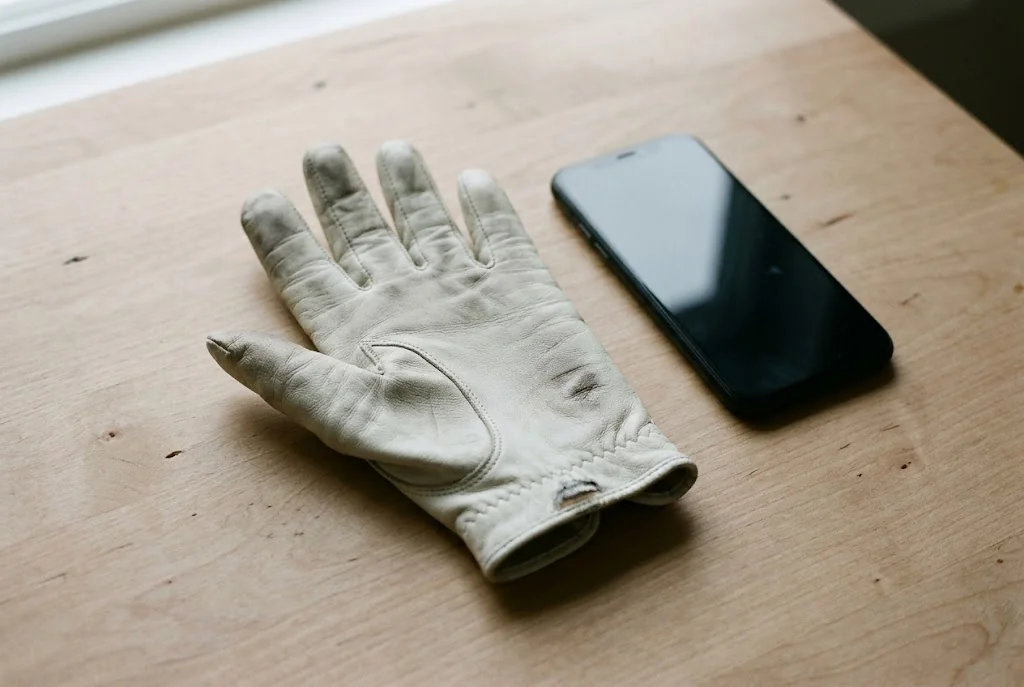
A useful golf glove defect report identifies the exact item, describes what happened and records its condition without deciding the cause in advance. Brands should connect customer feedback to the product version and relevant batch, then send clear, proportionate evidence to the manufacturer. A photograph of a worn palm alone is rarely the whole explanation.
Separate the customer response from the investigation
A customer needs a clear response to their problem. Your product team needs enough evidence to understand it. Organise both tasks without making a person repeat the same explanation to several departments.
Assign an issue reference and record the customer's description in plain language. Preserve the distinction between what was reported and what your team later confirms. “Customer reports a split after the second round” is more precise than labelling the whole batch defective before anyone has examined it.
This is a product-feedback workflow, not a template for a consumer returns policy. Resolve customer service decisions through your established arrangements while the manufacturing investigation continues.
Identify the glove before comparing complaints
Record the style, material, colour, fit cut, size and wearing hand. Add the order or batch reference where available and identify the approved specification. Two visually similar gloves can belong to different constructions or revisions.
Our SKU guide explains how to maintain variant identities. Use that record rather than asking a manufacturer to identify the item from an isolated image of its palm.
If a retailer supplied the glove, establish which product reference it sold. Keep personal customer details in your own service system; an investigation usually needs a case reference and product evidence, not the customer's full address or payment history.
Request photographs that answer specific questions
Start with an overall view of the glove, then a clear detail of the reported area. Where useful, show both sides of a seam or the closure in its normal fastened position. A close-up should have enough context to locate the issue.
Ask for ordinary, well-lit photographs. Filters, heavy sharpening and dramatic lighting can hide or exaggerate details. Keep the original files alongside any marked copy. A simple arrow on a duplicate can identify the location without altering the underlying evidence.
If physical examination may be necessary, agree what should happen to the glove. Do not discard, repair or subject it to an improvised stress test before the relevant team has decided what evidence it needs.
Collect use context without turning it into blame
Ask when the issue was first noticed, how the glove fitted at the start and what kind of use occurred. Record relevant wet conditions, cleaning and storage. Keep estimates labelled as estimates.
| Question | Why it helps |
|---|---|
| Which version? | Connects the issue to the right construction and approval. |
| Where is the change? | Distinguishes a seam, print, material or fit observation. |
| When was it noticed? | Separates arrival condition from later observations. |
| What use and care occurred? | Provides context for reviewing the evidence. |
| Is the physical glove available? | Allows further review if photographs are insufficient. |
Keep questions neutral. Neither “the customer must have used it incorrectly” nor “the factory must have made it incorrectly” is a finding. The wear guide and care guide provide background without diagnosing an individual case from one mark.
Group similar cases, then check the denominator
Use consistent issue descriptions so your team can compare reports. A print complaint, an incorrect-hand delivery and a finger-length concern should not all disappear into a single “quality” category.
Check for duplicates and connect each report to the affected product version. If you calculate a rate, define both the number of relevant reports and the comparable number of units supplied. A raw complaint count from a large range cannot be fairly compared with a count from a tiny trial.
Be cautious with small samples and incomplete records. Your internal observations should guide investigation; they should not become an advertised failure rate or a claim about every glove made from a particular material.
Send one report with a clear next question
Provide the product reference, a concise chronology, original photographs and the comparison you want reviewed. Identify whether the brand needs help establishing the cause, checking a specification or developing a change. Keep earlier conclusions and unresolved questions distinct.
Texpak retains approved master samples and carries out leather, print and workmanship checks described in our quality-control guide. Those references help structure a discussion; they do not predetermine the outcome of a particular complaint.
Close the record with the evidence reviewed, the agreed action and the person responsible. If the product changes, connect that decision to sampling, artwork, care information and future production. Contact Texpak about an identified manufacturing project with a clear brief rather than an unsupported diagnosis.