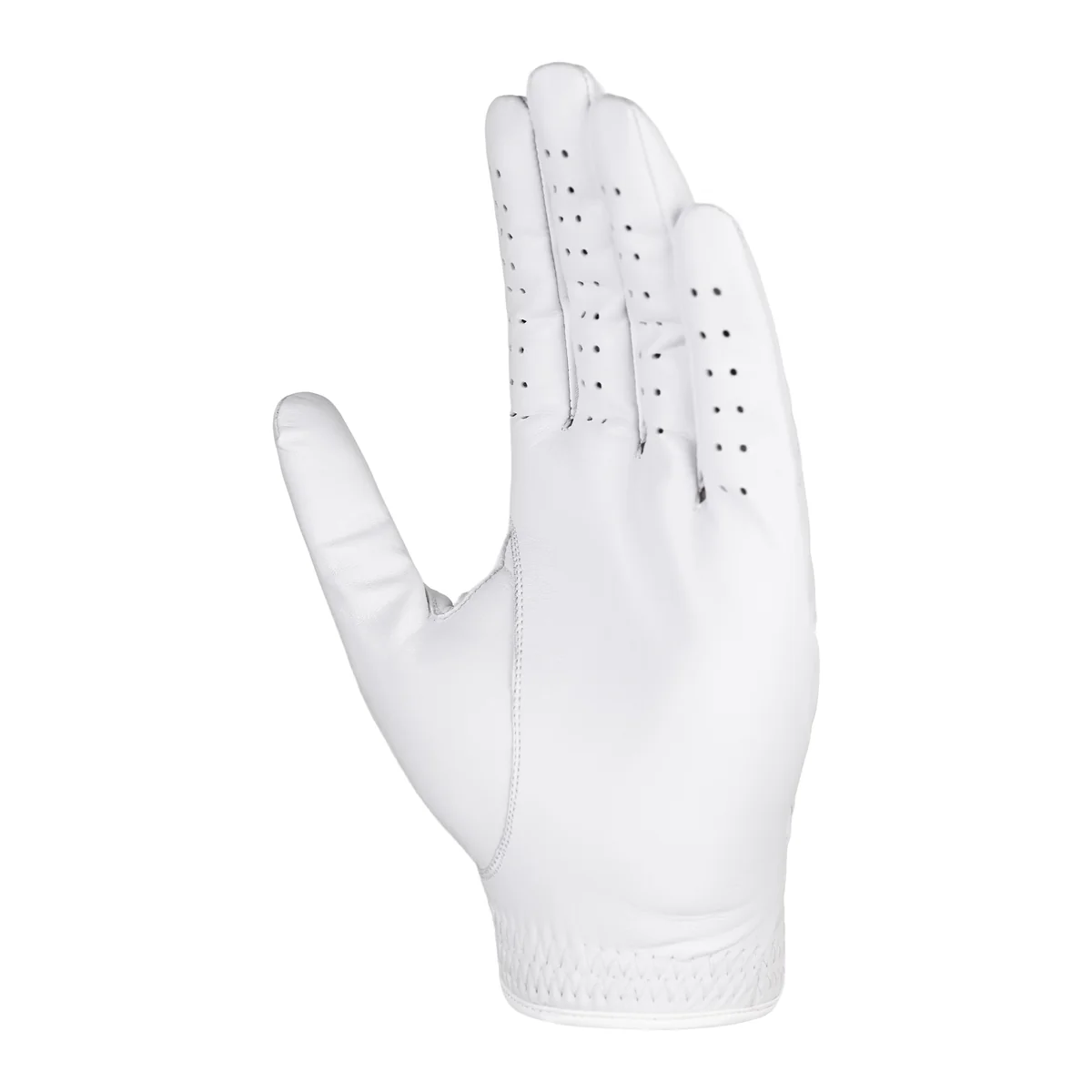
A hole in the palm or thumb can come from repeated rubbing, fit, how the club is held, the glove's construction and the conditions in which it is used. The location can suggest what to check, but a photograph of a worn glove cannot by itself prove poor technique or a manufacturing defect.
Start with where and when the wear appears
Note the exact area, whether the damage is rubbing or a split, and how early it appeared. Check whether it happens repeatedly with the same glove model, across different models, or only during particular practice sessions. Keep the receipt and take a clear photograph if you may need help from the seller.
| Wear area | Useful checks | What it does not prove |
|---|---|---|
| Palm | Movement inside the glove, fit and the contact between hand and club | That every palm hole is caused by the same grip fault |
| Heel of the hand | Where the end of the club rests and whether the club moves during the swing | That leather grade alone caused the wear |
| Thumb | Thumb placement, fit and repeated rubbing | A complete diagnosis from one photograph |
| Seam or finger area | Fit under flexion, the actual seam and how the glove was put on | That a tear automatically represents normal wear |
What published fitting guidance says
FootJoy's fitting guidance identifies possible connections between palm wear and hand movement or grip position, heel wear and re-gripping or club-end position, and thumb wear and thumb placement. These are prompts to review how the glove and club interact, not proof that a particular player's technique is wrong.
If the same area wears quickly across several properly fitted gloves, ask a qualified golf professional to watch your grip and movement. Avoid rebuilding your grip around a generic photograph or a single internet tip.
Why reinforcement placement can matter
In Texpak's manufacturing experience, an incorrect grip can shift pressure away from reinforced high-wear areas and make a glove wear faster in an unreinforced area. That observation needs a model-specific qualification: not every glove uses extra reinforcement, and different designs place it differently.
Compare the palm construction of the exact glove you own. An additional layer or patch changes a particular area; it does not make the entire glove equally resistant to rubbing. A thin glove chosen for feel can also be a different product proposition from one designed around reinforced contact zones.
This is not a reason to dismiss early failure. If a new glove tears unusually early, the seller or manufacturer should have the opportunity to inspect the evidence against the intended construction and use.
Check the fit while holding a club
A glove can appear neat with an open hand yet bunch or pull when you grip. Try your normal comfortable hold and look for spare material folding into the palm, fingers that are too long, or areas that pull sharply when flexed.
Do not compensate for the wrong proportions by tightening the closure harder. Use our fit guide to check the shape, including whether a different cut may be more suitable. No size label guarantees the same proportions across every model.
Record conditions as well as rounds played
A round count alone is an incomplete description. Long range sessions, damp storage, the state of the club grip and repeated use of one glove can all be relevant context for an inspection. Tell the seller what happened rather than only saying the glove lasted two rounds.
Follow the manufacturer's care instructions and allow the glove to dry appropriately. Our care guide covers handling and storage; this article focuses on investigating the location of wear. We do not assign a universal number of rounds that every glove should survive.
What brands should record in a wear complaint
Ask for the model, size, worn hand, purchase date, photographs and a description of use. Compare the location with the approved sample and construction. Keep manufacturing inspection separate from any recommendation for the player to seek coaching; one does not cancel the other.
Look for repeated evidence before changing the product. Several similar failures may justify reviewing fit, stitching, material or reinforcement, while one photograph may leave important questions open. For development support, discuss the relevant sample and specification with Texpak rather than applying a universal patch to every glove.