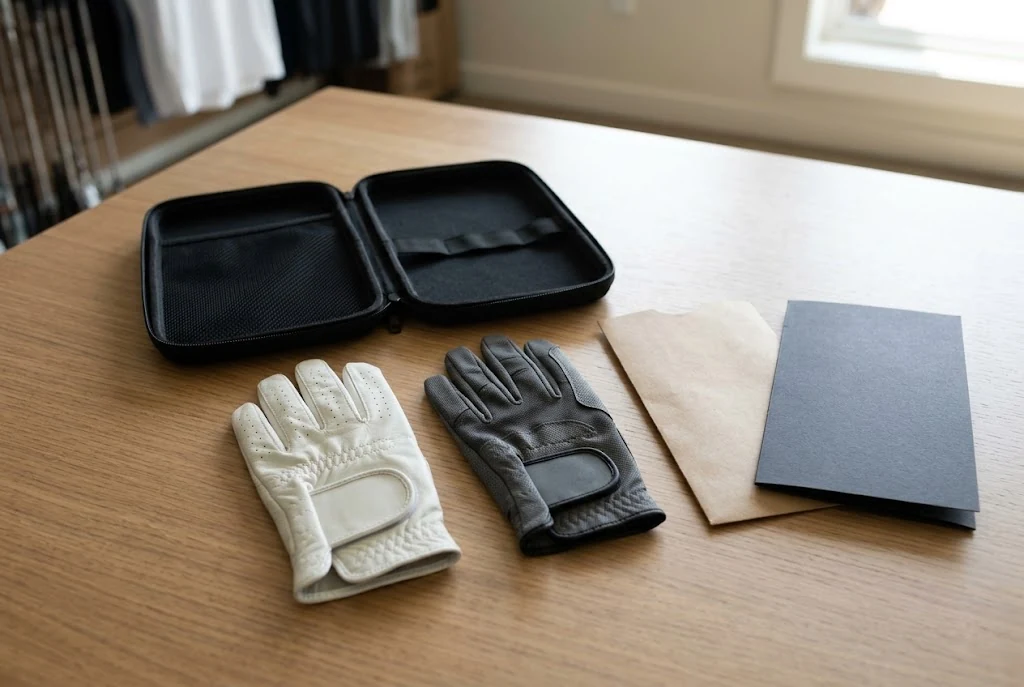
An apparel brand should add golf gloves when it can explain who the glove serves, develop a product that suits those golfers and support the new fit and stock requirements. A familiar logo and an existing audience are useful starting points; they do not establish demand or approve the glove.
Give the new category a specific role
Start with a reason a customer would buy the glove from your brand. It might complete a restrained on-course collection, carry a distinctive graphic into equipment, or answer requests from customers who already buy your apparel. Each direction implies a different product brief. “Another item for the website” does not help a manufacturer choose materials or develop the fit.
Use actual customer questions where available. Distinguish a customer who asks when a glove will be available from someone who likes a proposed colour in a social post. Neither response guarantees a sale, but the first offers a clearer question to investigate. Ask what glove the customer currently uses, which feature matters and what they would want to change.
Write a category statement before designing a range: intended golfer, reason to choose the product and the place it occupies alongside your apparel. Keep that statement with the development brief so visual decisions do not gradually replace the original purpose.
Choose one product job before choosing several colourways
A glove can carry your brand identity without reproducing every detail of a polo or jacket. A large garment graphic may not work on a small moving hand, especially across seams and the closure. Decide which element matters most: the colour relationship, a particular mark, or a repeating motif.
Texpak can discuss Cabretta leather, synthetic leather and synthetic suede. In our manufacturing experience, Cabretta is the preferred direction when a soft, premium leather feel is central to the brief. That is a material discussion, not proof that an apparel brand's audience will prefer it. Use the material comparison to prepare alternatives for physical review.
A focused first product is easier to explain and investigate than several near-identical styles. Keep an additional colour or construction only when it serves a defined customer or channel. A complete clothing palette is not automatically a sensible glove assortment.
Build a glove fit process separate from clothing fit
Your existing apparel size labels cannot establish glove sizes. Gloves have their own proportions, wearing hands and fit ranges. Texpak works from regional base patterns and can discuss adjustments, but the intended users still need to assess physical samples.
Do not make the whole range fit only the founder. Involve suitable wearers across the planned size range, identify each sample and record local observations about palm, fingers, thumb and closure. Our fit-range manufacturing guide explains why regular, cadet and other programmes need explicit choices.
Plan how those fit decisions will become customer information. Staff who answer shirt-sizing questions may need a different reference for gloves. Keep the approved glove fit information accessible before the first customer order.
Check what the new category adds to your operation
| Decision | What should be settled |
|---|---|
| Product identity | A clear material, construction and design direction with an approved physical reference. |
| Variants | The actual sizes, fit ranges, colours and worn hands your brand will support. |
| Sales channel | Whether the first stock serves your own store, retailers or a defined combination. |
| Customer support | Accurate fit and care information, plus a route for product questions. |
| Stock handling | Identifiable glove variants that your existing warehouse can receive and pick correctly. |
The SKU guide covers the variant record. Keep gloves distinct from apparel even if they share a collection name. A customer ordering a medium shirt has not specified a medium glove, a wearing hand or a particular fit cut.
Use a decision gate before announcing the collection
Imagine a fictional apparel label whose customers ask for a glove matching its quiet navy collection. The brand could first develop one glove direction, compare materials and assess fit, then decide whether the result deserves a place in the collection. This is a development example, not a Texpak customer story or a sales forecast.
The decision is stronger when it includes the approved sample, a viable order breakdown, a complete cost view and a realistic stock-arrival plan. If one is unresolved, the next step may be more development rather than a launch announcement. Our sampling timeline separates development, manufacturing and transport.
Discuss your apparel brand's first glove with Texpak using your current collection, intended golfer, target market and proposed role for the product. Bring existing artwork and identify which decisions remain open. We can help develop a practical glove specification rather than treating the clothing design as a finished manufacturing instruction.