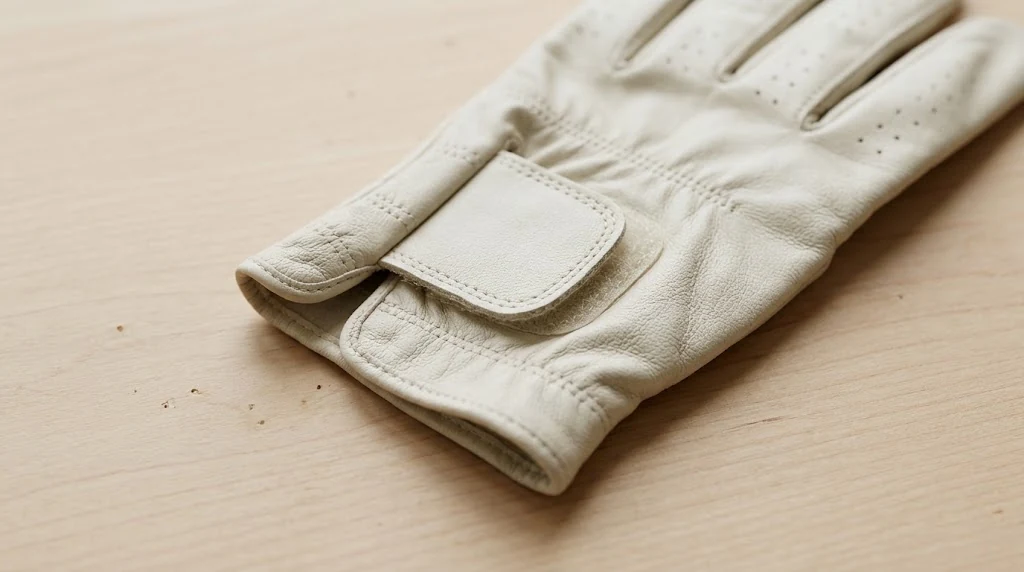
A women’s glove brief should specify the proportions and wearing hands the brand needs. Compare the fit on physical samples before approving the cut, and keep visual design choices separate from the fit decision.
Define the wearers before the range
The Slovak Golf Association’s 2026 programme included the Ladies Slovak Golf Open in the LET Access Series calendar. This is a public example of women’s competitive golf in Slovakia. A club or brand developing its own range should establish the intended wearers and buying channel independently, then check the glove against that audience. SKGA’s event announcement and the 2026 calendar.
Choose whether the glove serves a club shop, a brand’s direct sales or a team order. The intended use affects how many sizes are needed, who checks fit and whether staff can offer a second cut when a customer asks for it.
Look at proportions across the whole glove
Use the palm, fingers, thumb and closure as four separate observation points. Ask which part feels restrictive and whether the problem appears with an open hand or while holding a grip. A colour or branding change can be reviewed separately once the fit is established.
In a hypothetical sample review, one wearer finds the palm secure and has spare fingertip length. A second wearer in the same labelled size finds the thumb position uncomfortable. Those are two different development questions. Keep the sample references and ask whether another cut or an adjustment to a specific area would make the comparison clearer.
Give the factory a reproducible comparison
Mark the worn hand and size on every sample. Use an agreed physical reference where possible, and make a brief note of any other differences in the two gloves. A change in panel material or thickness can alter feel while the pattern is being reviewed. Keep those differences visible rather than treating the size label as the entire explanation.
Texpak works from base fit patterns and can discuss adjustments through sampling. A buyer can request the intended wearer range without asking the manufacturer to publish proprietary measurements. The fit range guide gives the initial specification questions.
Compare a pattern change with a material change
In a separate development project, a former professional golfer starting a brand asked Texpak for leather thinner than its usual specification. The team advised retaining the usual leather thickness and proposed a snugger pattern as an alternative. It sent the requested thinner samples and another option that combined standard-thickness leather with a snugger pattern. The buyer selected the standard-thickness option with the adjusted pattern.
Give each option its own physical reference when you face a similar question. Ask the intended wearers to describe where the fit differs and record what they select. A buyer can then approve a construction and pattern together based on the actual gloves.
Approve the range the shop will actually stock
Review more than the single show sample before committing the assortment. Give staff a clear distinction between fit, size and wearing hand. If stock is limited, put the variants with proven requests first and make any untested extensions separate decisions.
Agree which property should remain fixed through the revision. If the buyer likes the leather feel and the concern is finger length, ask the factory to preserve the material reference while reviewing the pattern. When several changes are proposed, ask which samples will be needed to compare them. Before selecting the final range, have staff identify a suitable product from the fit notes and compare it to the approved glove. The same reference should still work after the packaging and artwork have been finalised.
Use the sample revision guide when a change is needed. Discuss the Slovak range with Texpak with the intended wearers, fit reference, material direction and expected quantities by variant.
Related guide for Slovakia · Custom Junior Golf Gloves for Slovakia’s Short Events
Explore Texpak’s private-label golf glove manufacturing for materials, sampling and production options.