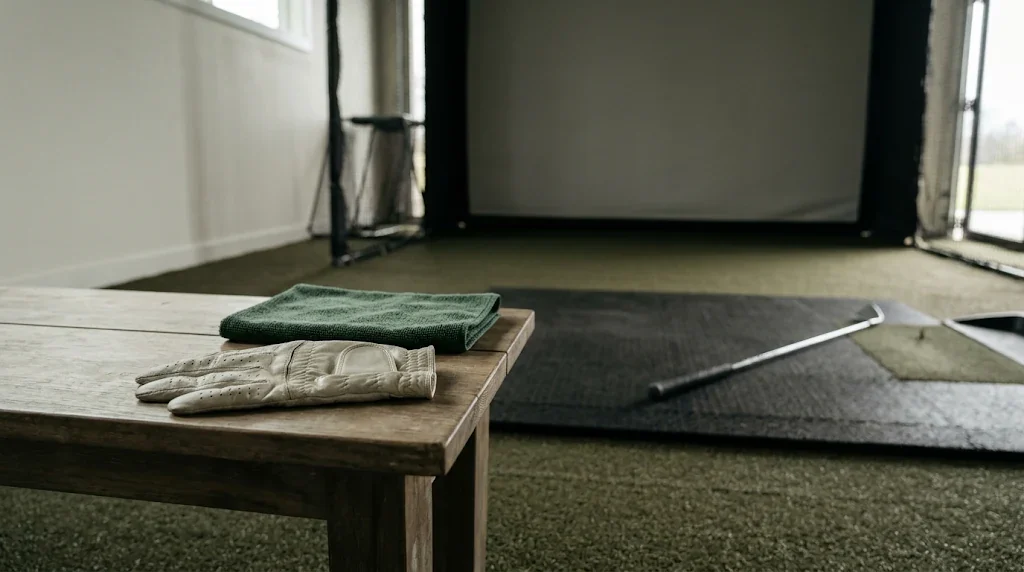
A simulator operator can test a glove’s fit and construction in a repeatable indoor setting. Start with a defined sample question and keep that evidence separate from performance claims about outdoor play.
Use the setting as a test opportunity
In June 2026, Norges Golfforbund announced simulator golf as a recognised discipline within its organisation. It also publishes information about its simulator championship. Those are concrete examples of indoor golf as an organised activity in Norway. A simulator operator’s product opportunity still depends on the actual users of its bays and counter. NGF’s announcement and championship information.
Ask the operator whether it sees repeat practice sessions, group bookings or competitors. Those patterns affect where a glove fits in the offer and how staff can collect an observation without interrupting the session.
Observe one construction detail
Use an identified sample and record which wearer, size and cut is represented with a nonpersonal reference. Choose a specific question such as whether a finger seam is noticeable after a set of shots. Ask the person to point to the location and describe when it became noticeable. Keep the sample and photo together so the factory can investigate the correct construction.
In a fictional trial, a player might notice a seam in the last part of a session and ask to try a second glove. If the other glove has a different size and material as well as a different seam, that comparison cannot isolate the cause. Use the inside seam review guide to plan the next sample with one clearer variable.
Separate indoor observations from product claims
Note the session length, number of sets, starting glove condition and whether the person changed gloves. An indoor trial can highlight a fit question. Weather performance requires a suitable assessment for the intended claim. Keep staff descriptions tied to the actual glove, and avoid transferring an observation about indoor use to a promise about rain or cold.
If the glove will also be sold for outdoor play, agree how that different use will be assessed. The wear trial guide explains how to keep use conditions, observations and conclusions distinct.
Match the counter offer to the venue
Choose whether the business will offer immediate replacements, take orders after a fitting or direct players to its shop. Record actual sales and unavailable sizes before approving a broader inventory. Label every sample clearly so a glove tried in one bay can be identified at the counter.
Keep the trial short enough to run during ordinary sessions. Ask the wearer to check the fit before play, review the same contact points after a defined set, and say whether the fit question needs another sample. If an operator changes the grip or player between observations, record it. The product team can then assess whether the feedback still answers the original question. Plan to repeat the trial with the approved revision before listing it. That gives the person at the counter a physical reference that matches the finished offer.
Bring Texpak your Norway simulator glove brief with the audience, construction question, intended stock model and the approved sample decisions you want to reach.
Related guide for Norway · Glove Sourcing for Norway’s Veien til Golf Programmes
Explore Texpak’s private-label golf glove manufacturing for materials, sampling and production options.