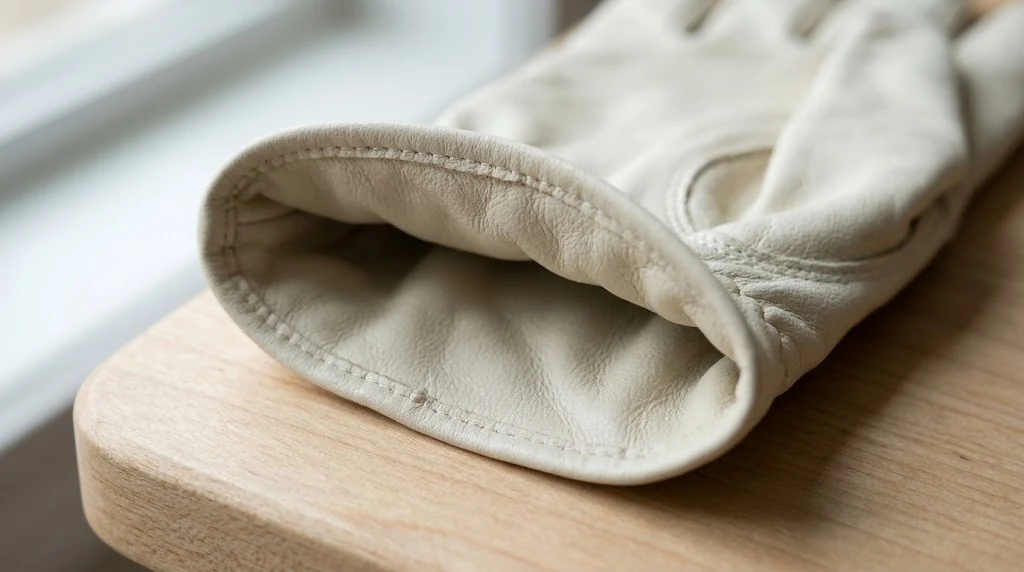
Review inside-seam comfort on the actual glove, using the correct size and fit range and noting exactly where an edge or seam is felt. Compare an open hand with a normal grip position. A local sensation is useful feedback, but it does not by itself establish a defect, a medical cause or the right manufacturing correction.
Identify the sample before judging the inside
Keep the style, revision, material, fit range, size and wearing hand with the review. A note about finger comfort loses much of its value if nobody can tell which prototype was worn. Check that the sample is intended for that wearer before comparing construction.
A restrictive finger or an unsuitable thumb proportion can affect how a seam is perceived. Begin with the broader fit check, then record the local observation separately. Do not conclude that a different seam is needed when the wearer is assessing an inappropriate size.
Where two prototypes are being compared, identify the changed detail. If material, pattern and several seams all change together, the wearer may know which glove feels preferable without knowing which alteration caused the difference.
Inspect without changing the sample
Look inside as far as practical without forcing the glove or damaging its construction. Compare the relevant finger, thumb, palm junction or cuff area with the outside view so the manufacturer can locate it. Use ordinary lighting and retain unedited photographs alongside any marked copy.
Do not cut, trim or pull at an internal edge before agreeing whether the physical sample needs examination. Altering the glove can remove the feature the product team needs to assess. If access is difficult, ask which photograph or returned sample would be useful instead of improvising a destructive inspection.
A photograph can show a visible edge or stitch. It cannot reproduce the wearer's sensation. Keep the visual observation and the person's description together without treating either as the whole explanation.
Use repeatable hand positions
Ask the wearer to put on and fasten the glove normally, then compare the relevant area with the hand open and holding a suitable club grip. This is a sample comfort observation, not a swing assessment. There is no need to add a hard swing or force an uncomfortable position to produce feedback.
| Record | Useful description |
|---|---|
| Sample identity | Style, revision, size, fit range and worn hand. |
| Location | Named finger or thumb area, side and approximate position. |
| Hand position | Open hand, closing around the grip or normal held position. |
| Observation | What is noticed, without a diagnosis or assumed cause. |
| Evidence | Overall view, located detail and whether the physical sample is available. |
| Next question | What the manufacturer should review and which other approved features should remain. |
For example, a fictional reviewer might write: “On sample B, the inside edge beside the ring finger is more noticeable when I close around the grip; sample A does not feel the same there.” That is more actionable than “make the glove comfortable”. It still leaves the construction team to assess the cause.
Separate local seam feedback from the whole fit
Ask whether the same observation appears in another suitable wearer and whether it is limited to a particular size or revision. Agreement across reviewers can help identify a development question, but a small informal review is not a representative comfort study.
Keep palm width, finger length, material feel and the seam observation in separate fields. If the next sample changes a pattern dimension, review the complete fit again. Solving one local issue should not quietly leave another part of the glove unsuitable.
Texpak uses measurements, marked photographs and physical reference gloves to understand sample feedback. Pattern changes and revised samples can be discussed through that process. Our revision guide explains how to turn observations into one consolidated request.
Ask for a practical construction response
Describe the desired result rather than prescribing an unverified sewing instruction. Ask the manufacturer which construction changes are feasible and what else they may affect. Do not demand the removal of a seam simply because it is visible in a drawing; the assembled glove needs a workable construction.
Texpak cuts and stitches gloves in-house and checks workmanship during production and before packing. Those confirmed processes support a discussion; they do not justify claiming that every proposed design is seamless or that one construction prevents irritation. The quality guide covers the separate inspection questions.
Approve the revision before making a public claim
Assess the revised seam against the recorded concern and note the decision. Use the wear-trial plan for longer use assessment; a brief try-on does not establish durability.
Write product copy that matches the construction and evidence. “Comfortable” in an informal feedback note does not establish a skin-safety, medical or guaranteed all-day-comfort claim.
Send Texpak an identified sample brief or revision question with the location, hand position and supporting views. Specific observations give the team a clearer route to a workable glove than a general request to improve quality.