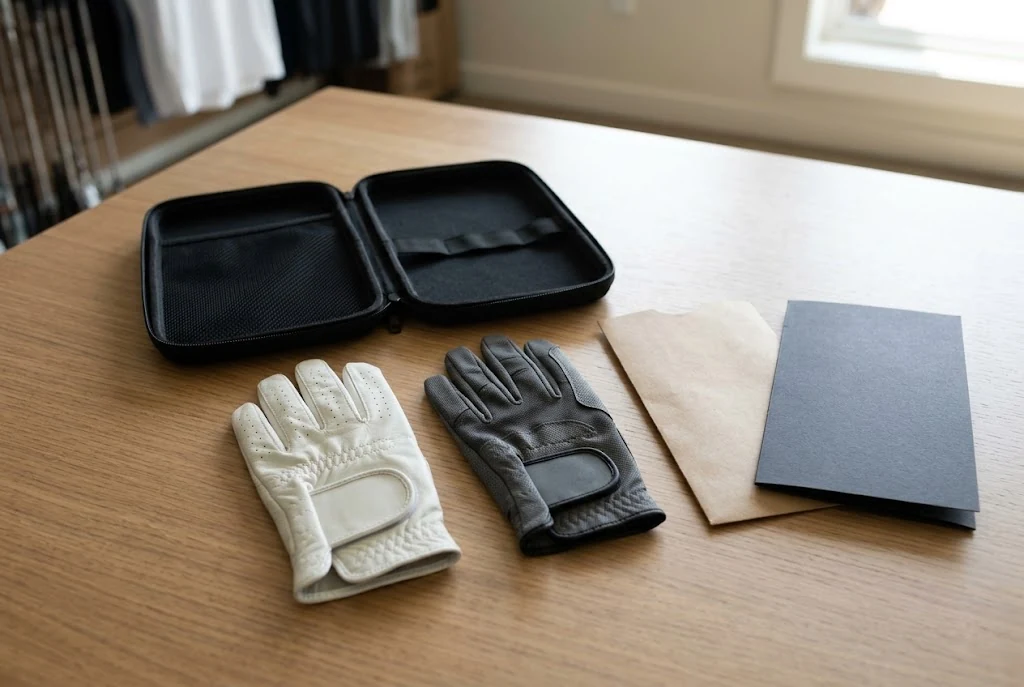
A useful wholesale golf glove sample kit combines identified examples of the approved product with the few extra pieces a retailer needs to assess fit, construction and presentation. Separate clean product references from try-on or playing samples, and keep every piece aligned with the current line sheet.
Give each physical sample a job
A golf glove wholesale sample kit should let a retailer understand the proposed product, handle its materials and identify what can actually be ordered. The most useful kit is not necessarily the largest. Every item should answer a buying question that photographs or a line sheet cannot answer as clearly.
Start with the approved range rather than every prototype your brand has developed. If a style is still being revised, identify that status. A buyer should not leave a meeting believing that an earlier experiment represents the glove that will be delivered.
The wholesale line-sheet guide covers the orderable variants and commercial information. The physical kit complements that document; it does not replace an agreed product record or create confirmed stock.
Separate the selling reference from the try-on glove
A glove passed around a shop can become stretched, marked or worn. Keep its role clear, especially if it is later compared with a fresh delivery.
| Role | What it helps establish | How to identify it |
|---|---|---|
| Current product reference | The approved appearance, materials and construction being offered. | Style, version, worn hand, size and approval reference. |
| Try-on sample | Fit discussion and comparison with the applicable fit information. | Actual size and fit range, with its demonstration role clear. |
| Trial sample | Feedback from agreed course or range use. | Separate trial reference, starting condition and feedback record. |
One glove may begin as a clean selling reference and later become a demonstration piece. Record that change rather than continuing to describe it as untouched. Keep an appropriate clean reference available when condition matters.
Texpak retains approved master samples for production comparisons. Your travelling sales kit should be tied to that approved version, but it should not be treated as a substitute for the retained master. The wear-trial guide explains the separate job of a glove that will actually be played in.
Choose pieces that reveal meaningful differences
If two proposed styles differ in palm material, make both palms easy to inspect. If they share the same construction and differ only in print, decide whether every printed version needs a complete glove in the travelling kit. Use accurate approved photographs for visual breadth and physical pieces for the differences a buyer needs to feel.
A loose material swatch can support a conversation, but it is not a finished glove. Seams, panel placement, closure and fit belong to the assembled product. Avoid presenting a swatch as proof that every part of the complete glove uses that material.
Include the intended packaging when it affects the shop presentation. Mark a packaging mock-up as provisional if it is not approved. Check that the packaging and glove references match: an attractive sleeve showing an old material description can confuse an otherwise straightforward meeting.
Keep the approved product photographs accessible so the buyer can later identify the same back, palm and detail views. A compact digital folder can carry additional images without turning the case into a collection of redundant samples.
An example of a focused two-style kit
Imagine a new brand preparing to show a Cabretta style and a synthetic style to a pro shop. This is a fictional kit-planning example, not an existing Texpak package or a promise that a particular sample assortment is available.
The brand could bring one current product reference for each style, the relevant approved packaging, separately identified try-on gloves in selected available sizes, and a current line sheet. A short contents record connects every physical piece to its style and version. Additional colours can be shown through approved images when their physical differences do not need separate demonstration.
The selected try-on sizes do not establish the range's full fit or guarantee that every visitor will find a suitable sample. State what is present and refer to the applicable fit information. Avoid using another brand's size label as proof of identical dimensions. For staff using those pieces with shoppers, the shop try-on workflow covers the separate consultation and exact-variant confirmation.
If the retailer wants course testing, agree which glove is being released for that purpose and how feedback will return. Do not send the only clean product reference away without retaining an identified comparison.
Make a kit easy to lend and easy to recover
Use a simple handoff record with the kit reference, contents, condition, responsible business contact, date supplied and agreed return or follow-up arrangement. State which pieces are being left, loaned or supplied for trial. These are commercial decisions to agree with the buyer, not terms that automatically come with a sample.
Keep contact details in your private business records, not printed into a public download. A lost kit should not expose another retailer's order information. Keep competitor products, private customer samples and unapproved artwork out of the case.
After a meeting, capture the buying questions that remain: fit range, material preference, orderable variants or delivery arrangement. That is more useful than a note saying only that the buyer liked the glove.
Refresh the kit when the product changes
A changed material, pattern, logo or package can make the earlier kit inaccurate. Update the physical reference, photographs and line sheet together, then withdraw superseded pieces from selling use. If an earlier glove remains as a comparison, identify it as the earlier version.
Before building a wholesale kit, settle the underlying product. Texpak can discuss custom golf glove manufacturing and sample development around your target customers and proposed range. Sample making and revisions are free, with sample shipping paid by the customer. The kit you present to retailers remains your brand's sales tool, built from the product and commercial arrangements you have actually approved.