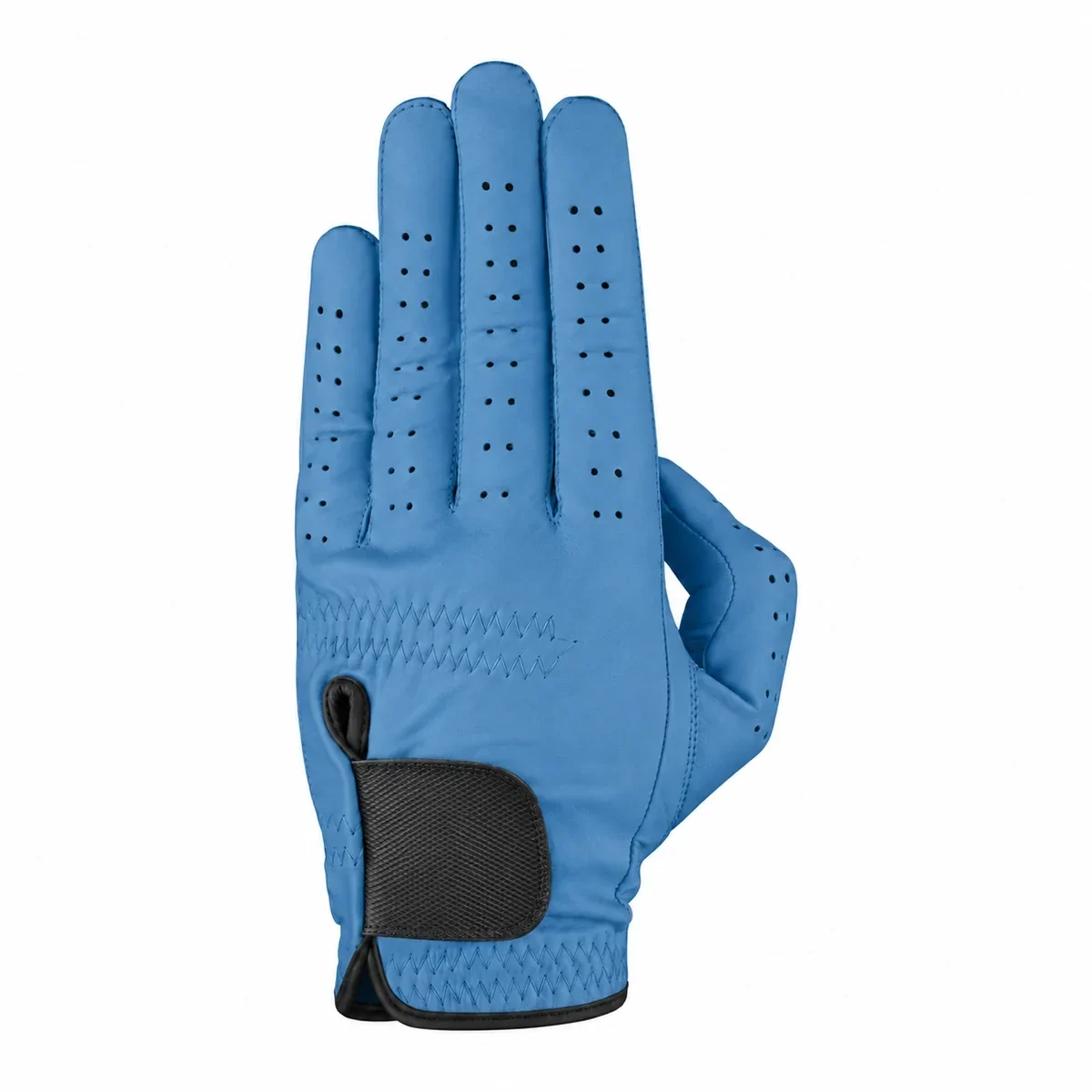
A wholesale golf glove line sheet is a concise buying document for retailers or distributors. It should show what they can order, how each variant is identified, the applicable trade terms and who to contact. Good photography earns attention; clear sizes, wearing hands, prices and availability make the document usable.
Keep the wholesale buyer's decision in view
A shop buyer needs to know whether the range fits the business and whether an order can be placed without a long chain of clarification. A line sheet connects those two decisions. It is not the same as a lookbook focused on brand imagery, a consumer product page or the tech pack used to develop a glove at the factory.
Shopify's wholesale glossary describes a line sheet as a product document a retailer can use to order. For golf gloves, that document needs particular care around fit ranges and wearing hands: “large, blue” does not identify a complete sellable item.
Decide who will use the document and in which market. A retailer buying finished stock needs different availability and delivery information from a distributor discussing a future seasonal collection. Label a proposal as a proposal instead of giving an unconfirmed range the appearance of ready inventory.
Start with a short commercial header
Give the collection a name, a document date or version and a direct trade contact. Identify the market and currency to which the terms apply. If one range is quoted differently for different destinations, issue clearly named versions rather than asking buyers to infer the correct currency from a symbol.
The header should also tell the buyer whether the sheet covers available stock, advance orders or products still under development. Use an agreed dispatch window for the actual order arrangement. A production estimate from your manufacturer is not automatically a delivery promise to a stockist.
Show each style with its important buying information
Use an accurate photograph of the approved product and a short description based on its actual construction. If one style has a Cabretta palm and a synthetic back, describe the relevant materials rather than calling the complete glove Cabretta.
Give each style a stable reference, then identify the size, cut, colour and worn hand of each orderable variant. State whether the selling unit is one glove or a pair. If a retailer orders six units, both teams should understand exactly what that number represents.
| Field | The buyer's question |
|---|---|
| Product photograph and style reference | Which glove is this? |
| Material and fit summary | What am I offering my customers? |
| Colour, cut, size and worn hand | Which exact variants can I order? |
| Selling unit | Does one unit mean one glove, a pair or a defined pack? |
| Trade price and currency | What is the confirmed price for that unit, and what does it include? |
| Order minimum and pack rules | What can be combined in an opening or repeat order? |
| Availability and delivery terms | When and under which arrangement can the order be supplied? |
Our product-photography guide covers the useful back, palm and detail views. Keep the line-sheet image easy to match to the actual item; a campaign photograph should not obscure which glove is being ordered.
A simple variant example
Below is a fictional order layout. The codes and range names are teaching examples, not Texpak stock references, an offered wholesale collection or a quotation. Replace the commercial fields with your own confirmed terms before sending a sheet to a buyer.
| Example order code | Variant | Selling unit | Trade price | Buyer quantity |
|---|---|---|---|---|
| RANGE-A-WHT-REG-M-LH | Range A, white, regular M, worn on left hand | One glove | Enter confirmed amount and currency | Buyer enters units |
| RANGE-A-WHT-REG-M-RH | Range A, white, regular M, worn on right hand | One glove | Enter confirmed amount and currency | Buyer enters units |
A photograph can be shared at style level, but those two quantities must remain separate. A buyer asking for ten medium gloves has not yet told you the hand breakdown. Make that distinction visible in an order form instead of resolving it after the order reaches fulfilment.
Download the blank wholesale line-sheet CSV to organise the fields. It is a planning template, with no Texpak prices or committed stock quantities.
Separate your wholesale terms from factory terms
Three different quantities can appear in the same supply chain: the manufacturer's production minimum, your minimum opening order for a retailer and the number of units in a defined pack. They answer different questions.
Texpak's general manufacturing MOQ is 250 individual gloves per design and colour, with smaller orders assessed case by case. That does not mean a stockist must buy 250 from your brand, or that the same threshold applies to every possible retail assortment. Your brand decides the wholesale structure it can support after confirming manufacturing, inventory and fulfilment arrangements.
Likewise, do not copy a supplier's payment or shipping arrangement into a stockist sheet unless it is actually the arrangement your business offers. Specify the trade price basis, applicable delivery scope, payment terms and process for handling shortages or problems with the buyer. Avoid presenting credit, exclusivity, returns or sale-or-return as included by default.
If your sheet shows a suggested consumer price, distinguish it from the trade price and explain the relevant currency and tax treatment. The line sheet should record confirmed commercial decisions, rather than inventing a retail margin from an incomplete factory quotation. Our manufacturing-cost guide explains why materials, decoration and packaging change the underlying discussion.
Make regional versions easy to maintain
Use one approved product record as the basis for every market version. A currency change should not accidentally alter the description of the leather or turn a glove worn on the left hand into a product for a left-handed swing.
Keep measurements in labelled units and refer buyers to the applicable fit information. A letter size does not prove that every brand's pattern is identical. If the range is being localised, have the translated terminology checked against the actual glove and its approved specification.
Check the sheet by placing a trial order on paper
Ask a colleague to select two variants using only the sheet and order form. Can they identify the price, total units, worn hands and expected supply arrangement without asking you to explain a missing field? Compare their choices with the product record and confirm that the codes lead to the intended items.
Proof the document at normal viewing size on a phone and as a printed page. Readable product information matters more than squeezing the complete range onto one crowded sheet. Keep a version owner, withdraw replaced copies and retain the accepted terms with each actual order.
Develop the glove before promising it to a stockist
A polished sales document cannot approve a product. Texpak sends physical samples for client review and retains approved master samples for later production comparison. Confirm materials, fit, artwork and packaging before describing them as settled in your trade information.
If you are building the underlying collection, share your range and target markets with Texpak. We can discuss custom manufacturing and sample development. Sample making and revisions are free, with sample shipping paid by the customer.
Use our tech-pack checklist for the manufacturing brief, our product-page guide for consumer information and the OEM service page for the wider development process. Each document has a clear role in bringing a collection to market.