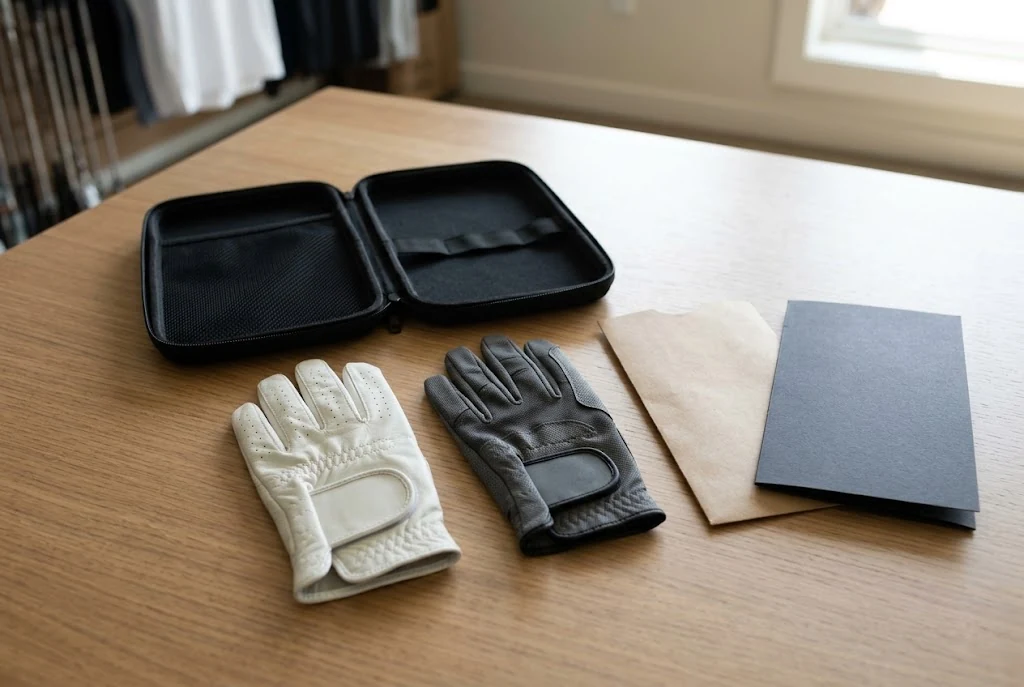
To approve a golf glove size range, agree which sizes and wearing hands will be reviewed, keep each sample identifiable and record fit observations against the intended wearer group. Approval of one medium glove does not by itself establish the fit of every size you intend to sell.
Separate range choice from range approval
Choosing men's, women's, cadet or junior options defines the fit ranges you want to develop. A size-set review asks whether the proposed samples represent the range you are preparing to offer. These are different decisions.
Our fit-range manufacturing guide covers the first choice. For approval, list the actual sizes and wearing hands, the relevant pattern and material, and any sample coverage still to be agreed. Discuss the scope and practical sample arrangements with the manufacturer; do not assume a complete size set is automatically part of every project.
Texpak uses regional starting patterns and can adjust them for a brand. That starting point does not replace review for the intended audience, and it does not make every customer in a country the same shape.
Agree the review coverage before collecting opinions
Decide who will coordinate the review, how samples will be assigned and what counts as an unresolved fit question. Include the whole intended range in the plan, marking sizes that are not yet represented. An empty cell is more informative than a general statement that all sizes are approved.
Use appropriate reviewers from the customer group you want to serve. Do not ask one person to make every size fit their own hand. When using a reference glove, identify its brand, model, cut, wearing hand and labelled size, then explain which aspect you want to compare.
Keep size labels separate from measurements. FootJoy's fitting guidance illustrates the distinction between regular and cadet proportions in its range. It does not supply a conversion table for another brand. Texpak's proprietary regional measurements remain private.
Use a matrix that exposes gaps
Start with the fields below and add the project references you actually need. This is a suggested buyer record rather than an assertion of a factory testing standard.
| Field | What to enter | Why it matters |
|---|---|---|
| Sample identity | Style, pattern revision, material, size and wearing hand. | Separates a fit concern from a different product version. |
| Reviewer context | Intended fit range and relevant reference information. | Shows whose observation is being assessed. |
| Local observations | Palm, individual fingers, thumb, opening and closure. | Turns a vague size verdict into usable feedback. |
| Decision | Accepted for stated scope, revision requested or not reviewed. | Prevents missing coverage from becoming implied approval. |
| Follow-up | Question, responsible person and next sample reference. | Connects the concern to an actual next step. |
Retain marked photographs where they clarify the observation. Use consistent views, including the natural grip, so the team can understand the location and context. The fit guide provides the individual fit checks; the matrix keeps them traceable across the range.
Look for recurring issues without averaging them away
Suppose, in a fictional review, the medium sample is accepted but reviewers of two other identified sizes repeatedly notice spare fingertip material. Record those specific observations. Do not simply average the comments into “fit is good”, or instruct the team to shorten every finger in every size.
Ask the pattern team which change needs investigation and which other samples should be checked afterwards. At Texpak, a sizing change requires pattern work. The sample-revision guide explains why precise feedback and an identified revision matter.
Also record conflicting observations. A difference between reviewers may reflect the target group's variation, the reference being used or an unresolved pattern issue. State what you know and ask the next question rather than manufacturing certainty.
Keep the approved range tied to the order
When review is complete, identify the samples and written references that form the approved range. Keep any unreviewed variants or remaining exceptions explicit. If material or pattern changes later, ask which previous decisions need checking again.
Then prepare the order quantities separately. The first-assortment guide owns that commercial decision; a size-set approval is not a prediction of which sizes will sell or a recommended purchasing ratio.
Discuss your intended size range and review plan with Texpak. Share the customer group, wearing hands, existing fit references and open questions so sampling can support a clear manufacturing decision.