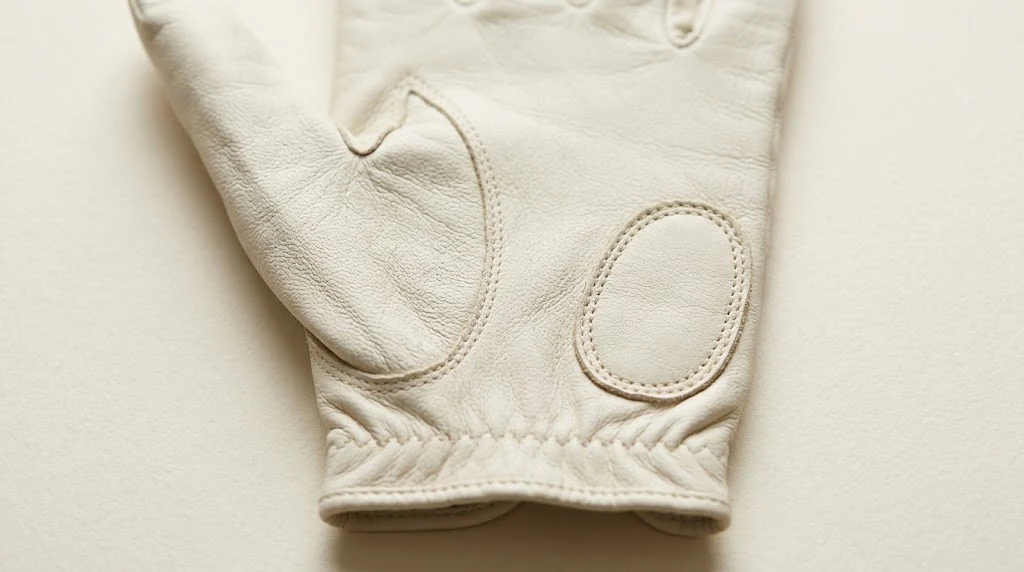
A palm patch should have a defined purpose in the glove you are developing. Review its position, material, edges and feel on a finished sample, then compare the result with your original brief. An extra layer does not by itself establish longer life or better grip.
Start with the problem, not the patch outline
“We want a reinforced palm” leaves several decisions open. Is the brand responding to an identified wear location, aiming for a particular feel or exploring a visual feature? Those starting points call for different questions. Ask what observation led to the request and which part of the customer experience must remain unchanged.
For an existing product, keep the feedback and affected variant traceable. Our palm and thumb wear guide explains why the location of wear is useful information without proving a single cause. A patch proposal should follow an assessment of the problem rather than treating every worn palm as evidence that another layer is needed.
For a new design, write the reinforcement as a development question. Confirm with the manufacturer what can be integrated into the chosen material and construction. A promising drawing is the beginning of that discussion.
Show the proposed area on the actual glove
Mark the patch on a palm drawing with the glove size and wearing hand. Include the proposed boundary and the surrounding seams. Keep its material description separate from the base palm material; a leather-looking overlay in a mock-up is not an agreed specification.
Our panel-mapping guide is a useful companion. For a reinforcement, go further by asking what happens at the transition between the added piece and the surrounding palm. Identify what the wearer will touch, not just the area visible in a product photograph.
Check the sketch with a hand in a natural gripping position. A flat outline can conceal how the proposed area folds, shifts or sits against adjacent panels. Do not prescribe an exact patch shape simply because it looks symmetrical on the screen.
Compare the finished construction deliberately
Use an identified reference glove and proposed sample. Record all known differences before comparing them. If the material, pattern, palm thickness and reinforcement have changed together, a reviewer cannot confidently attribute a different feel to the patch alone.
| Question | What to record | What the observation does not prove |
|---|---|---|
| Is the intended area covered? | Location relative to the agreed drawing and gripping position. | A universal wear-prevention result. |
| How do the transitions feel? | Specific edges or seams noticed by the reviewer. | Comfort for every golfer. |
| Does the palm still fit as intended? | Folds, movement or restriction in an identified sample. | That all sizes will behave identically. |
| Does the appearance match the brief? | Material, colour and visible construction reference. | A measured performance advantage. |
Use ordinary feedback language. “I notice the lower edge while closing my hand” gives a useful location. “It is uncomfortable” needs a follow-up question. Stop using a sample that causes discomfort and ask the development team to review the detail; an article cannot diagnose a skin or medical issue.
Keep development observations separate from claims
A short try-on can reveal a distracting transition. It cannot establish how long a finished glove will last. If the design proceeds, decide what ordinary-use feedback the brand needs and keep the starting sample and conditions identifiable.
The wear-trial plan provides a structure for that next stage. A few positive comments may support further development, but they should not turn into an unsupported claim that the reinforced version lasts twice as long.
A fictional brand might approve the position of a prototype patch while asking for its lower transition to be reviewed. The correct next step is an identified revision and another physical assessment. Approval of the location does not mean the unresolved edge has also been accepted.
Bring a clear reinforcement question to sampling
Send the manufacturer your intended customer, base palm material, proposed patch area, the problem it is meant to address and any physical reference you are authorised to share. Identify whether the reinforcement is essential or whether you are open to a different construction recommendation.
Texpak works with brands on materials, patterns and practical design changes. The team's anonymous concept-to-manufacturing example shows why material compatibility and real glove proportions need discussion. It is not evidence that every reinforcement idea is feasible or that a particular option is already an established Texpak service.
Keep the final material and construction decision with the approved sample. Discuss your proposed palm detail with Texpak before presenting it as a confirmed feature of a future collection.