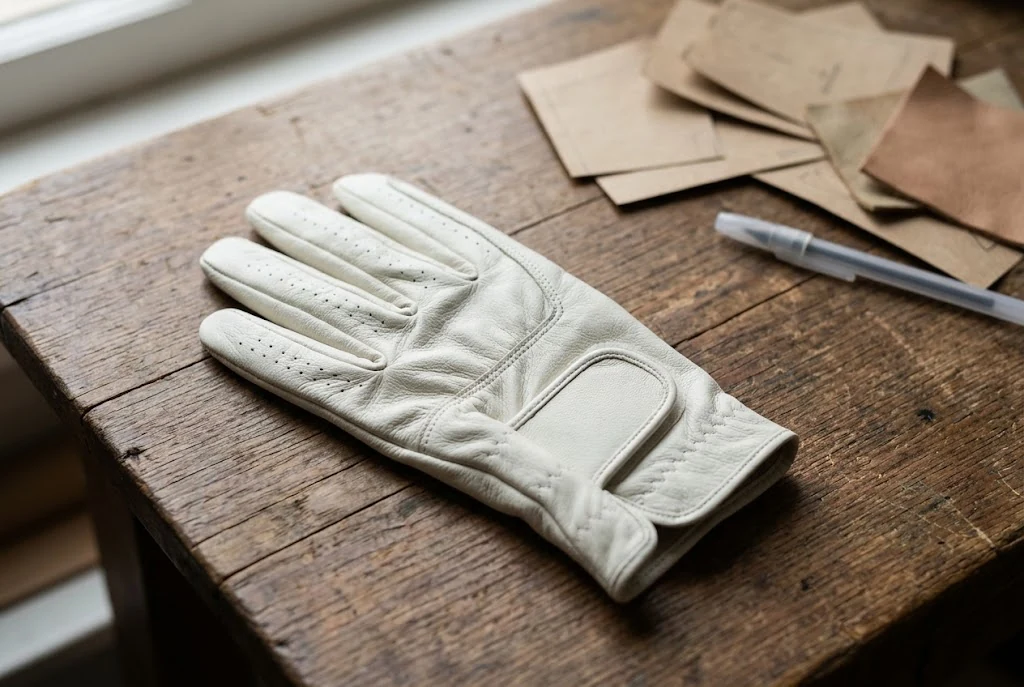
A golf glove concept image can start a manufacturing conversation, but it cannot settle the material, pattern, construction and fit by itself. Texpak helps new brands review those details, recommend practical design changes and develop physical samples for approval. The aim is a clearly defined product that preserves the brand’s direction and can be assessed as a real glove.
Decide what you want to keep from the image
A new golf brand may begin with a striking image rather than a finished glove specification. That is a useful way to communicate a direction: a bold back-of-hand graphic, a quiet colour palette or a particular overall shape. The next step is to decide which parts express the brand and which parts still need developing.
Mark the features you care about and explain why. If the colour relationship matters more than the precise graphic position, say so. If a closure shape is central to the concept, identify it early. Clear priorities let the designer suggest changes while preserving the reason you liked the image.
Include the palm and other views if they exist. Where the concept shows only one side, leave the missing construction open for discussion rather than assuming a manufacturer can read it from the visible surface.
Translate appearance into construction decisions
A rendering cannot establish the feel of a material, the dimensions of a pattern or how the finished glove sits on a hand. It may also leave seams, panel joins and closure details unresolved. These are development questions to work through before approving a physical product.
At Texpak, design support can accompany manufacturing development. The team can help new brands turn their direction into practical details, including material, colour, artwork and fit decisions. A customer does not need to arrive with a complete tech pack to begin that discussion.
| What the concept communicates | What still needs deciding |
|---|---|
| A smooth, premium-looking surface | The actual material and the panels on which it will be used. |
| A pattern across the back of the hand | Artwork dimensions, orientation and its relationship to the glove’s components. |
| A distinctive closure | Its practical construction, fit and approved artwork area. |
| An attractive outline | The intended fit range and physical sample review. |
This table illustrates questions to ask; it is not a diagnosis of any customer’s design. Use it to reveal the decisions an image leaves open.
How Texpak helped a new brand refine an AI concept
A customer starting a new brand brought Texpak an AI-generated golf glove concept with a fresh visual direction. The image looked appealing, but its proportions and construction choices created practical problems.
The fingers were unusually small relative to an oversized palm. Once the concept was considered at realistic glove proportions, the available surface could not accommodate all the proposed printing. The image also included a complicated panel arrangement on the back of the hand that needed a manufacturing review.
Another proposed feature was fingertip grip elements made from a particular material. The team judged that material unsuitable for integration with the leather construction and raised concerns about wearing comfort.
Texpak recommended realistic design changes and worked through the choices with the customer, who reviewed and approved the revisions. The project moved from an attractive but impractical image towards a workable glove product. The useful contribution was design development as well as manufacturing: explaining what needed to change while helping the customer retain a clear direction.
For your own concept, ask which proportions, surfaces and material combinations need attention. A specific explanation gives you a basis for reviewing the next design, rather than simply replacing one attractive image with another.
Ask the team to explain the proposed changes
When a manufacturer recommends a revision, ask what it addresses. Is it helping define an unresolved component, matching the artwork to a practical application, or bringing the fit closer to the intended customer? Understanding the reason makes the approval a product decision rather than an exercise in accepting a new picture.
For a hypothetical example, imagine a concept with a graphic running across several visible sections. The useful discussion is how that graphic relates to the component shapes and what the assembled appearance would be. Do not assume that an attractive screen image already specifies the production result.
Keep a short decision record: feature to retain, proposed adjustment, reason and approved version. If a recommendation changes something central to the brand, discuss another direction before treating it as settled. The printed-design guide covers decoration in more detail.
Use a physical sample to assess the revised design
A revised image can clarify appearance; a physical glove lets the customer assess material feel, fit and construction. Review the sample against the agreed direction and give specific feedback. Texpak can adjust patterns for a brand’s requirements, and changes should return to an identified approval reference.
Samples, revisions and prototyping are free, with sample shipping paid by the customer. Discuss the scope and likely sampling stages for your concept. Include the sample-delivery stage in your project plan.
The tech-pack guide helps record the resulting specification. The sample-revision guide explains how to give useful feedback once the physical development is under way.
What to send with your first concept
Send the image, explain the features you want to preserve and describe the intended customer and fit. Add material preferences, quantities and timing where known. Be clear about what is still undecided; Texpak can help establish details by email or develop a tech pack with the customer.
Use artwork and designs you have permission to develop, and identify reference images as references. An approved construction should become your own clearly recorded product brief.
Share your concept with Texpak’s team and ask which details need practical development before sampling. You can begin with a visual idea and work towards a glove whose appearance, materials and construction have all been considered.