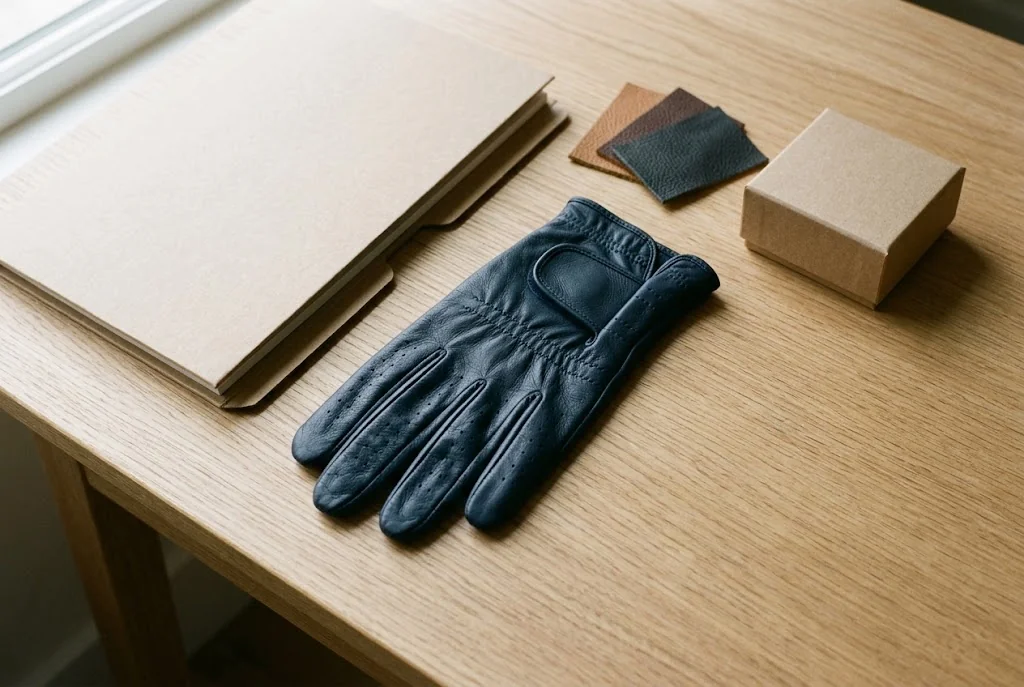
Ownership and permitted use of a custom glove design, pattern, artwork and tooling need explicit agreement. List the assets separately, distinguish what already existed from what will be developed, and ask what files or physical items can be supplied. A manufacturing model or development charge does not describe every right your brand may need.
Start with an asset list
A custom glove project can combine brand-owned artwork, a manufacturer's existing base pattern, changes developed during sampling and physical tools used for decoration. Treating that collection as one object called “my design” leaves several different questions unresolved.
Identify what your brand brings and what you are asking the manufacturer or an outside designer to create. Give each important asset a reference and a short description. If a supplied reference comes from another business, establish what you are entitled to use before including it in the production brief.
The OEM, ODM and private-label guide explains the development starting points. This article addresses the separate asset questions that still need an agreement.
Separate ownership, permission and possession
WIPO distinguishes assignment from licensing: one transfers ownership, while the other permits use under agreed conditions. A project can therefore raise questions about both who owns an asset and what another party is allowed to do with it.
Keep the physical object separate too. Ask who owns a logo die or mould, where it will be stored, who may use it and what happens when the project ends. A physical tool, a production file and the rights in the artwork are different entries in the discussion.
Do not infer the full arrangement from a line item such as tooling, sampling or design support. Ask what that charge or service covers and which rights and deliverables are included. Record the answer in the agreed project terms.
Ask item-by-item questions
| Asset | Questions to resolve |
|---|---|
| Brand logo and original artwork | Who supplies it, who owns or controls it, and what production use is authorised? |
| Existing base pattern | What is being made available, for which work, and under which use restrictions? |
| New pattern adjustments | Who may use the adjustments, and are any transferable files or measurements included? |
| Decoration tooling | What tool is needed, who owns and stores it, and are transfer or replacement arrangements agreed? |
| Development files | Which file formats and revisions will be delivered, and what may the recipient do with them? |
| Approved samples | Who retains which physical reference, and what role does it serve for production comparison? |
These are questions for negotiation, not a statement of Texpak's default ownership terms. No public promise of pattern transfer, blanket exclusivity or unrestricted file delivery is made here. Establish the arrangement for your actual project before relying on it.
Describe the exclusivity you mean
If exclusivity matters, name its subject. Does the request concern original artwork, one particular construction, a colour arrangement, a sales territory or another defined asset? “Exclusive glove” can mean different things to two parties.
Discuss the intended markets, products, channels, duration and any conditions. Distinguish your brand identity from ordinary features shared by many gloves. An agreed exclusive graphic does not necessarily explain the status of a pre-existing base pattern, and a private-label arrangement does not supply a complete exclusivity clause.
Texpak can develop gloves from regional base patterns and discuss brand-specific adjustments. Our pattern and fit-range guide explains the manufacturing discussion without publishing proprietary measurements.
Consider protection before public disclosure
WIPO's industrial-design guidance distinguishes appearance protection from technical invention protection and explains that design rights are territorial. It also warns that public disclosure can affect novelty. Seek appropriate advice on protection and disclosure timing for the markets you plan to serve.
A confidential development discussion and a public launch image serve different purposes. Agree how unreleased artwork, files and samples may be shared during development. Keep the accepted confidentiality and use arrangements with the project record rather than assuming a footer in an email answers every question.
Include later reorders and project changes
Ask what happens when the range changes, a tool needs replacing or the business wants to move production. Which approved files and samples will be available, in what form, and under which agreed terms? Resolve practical delivery and storage questions alongside the rights discussion.
Texpak retains master samples for production comparison. An approved sample is a useful product reference; do not treat its existence as a complete legal description of design rights. The supplier-handover checklist addresses the operational transition.
Discuss your design-development requirements with Texpak and identify any ownership, permitted-use or exclusivity needs at the start. Turn those needs into explicit project terms with suitable professional review where required, then keep the accepted asset list aligned with the manufacturing brief.