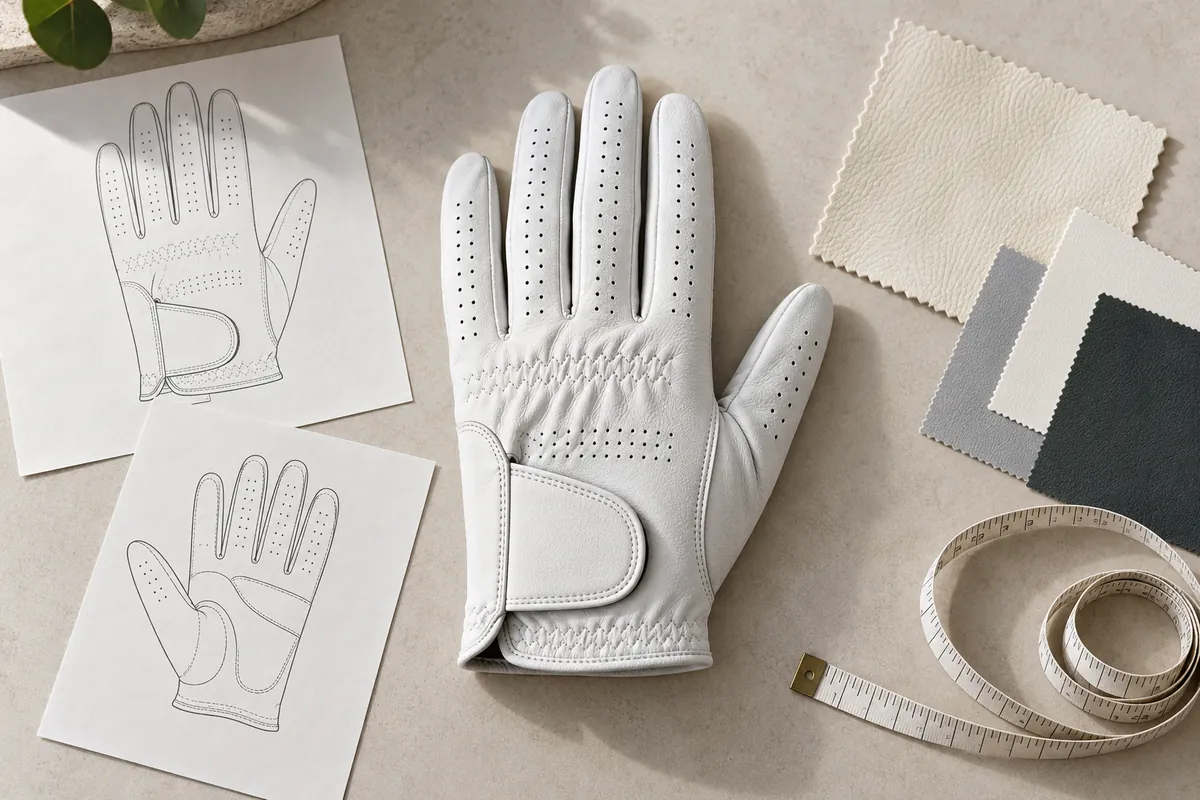
For a golf glove project, the useful distinction is who supplies and develops the design. An OEM-style brief normally starts with the brand's specifications; an ODM-style arrangement involves more manufacturer-led design. Private label describes selling the finished product under your brand. The labels help, but the agreed work and approved sample matter more.
What the terms mean in practice
IBM's manufacturing-model explainer distinguishes customer-specified OEM work from manufacturer-designed ODM products. Terminology varies across industries, so use the terms to start a discussion rather than assuming every supplier's offer has identical boundaries.
| Starting point | What the brand brings | What to clarify |
|---|---|---|
| Brand-led / OEM-style | A developed specification, artwork and fit requirements | Feasibility, sample changes and production responsibility |
| Manufacturer-led / ODM-style | Customer profile, design direction and branding | Which design work is included and what can be adapted |
| Private label | The brand name and agreed product requirements | Whether the base product is existing, adapted or newly developed |
Private label is not automatically a cheap stock glove with a logo added. A brand can sell a heavily customised product under its own label too. Ask what the supplier actually means by its service description.
If you already have a complete design
Bring a tech pack that connects the appearance to the construction: materials by panel, intended fit, colors, sizes, artwork dimensions, trims and packaging. Mark the features that must remain fixed and those that can change if manufacturing feedback reveals a problem.
A drawing that looks finished may still leave important choices open. A white palm in a concept image does not specify leather grade, thickness or acceptable feel. A narrow closure sketch does not establish its actual dimensions. Resolve those details during sampling rather than assuming the factory will interpret them exactly as you do.
Use our tech-pack checklist for the detailed fields. The point here is deciding who will supply the missing information.
If you have an idea but no technical files
Start with the intended golfer, budget, target feel and original visual references. Texpak can help develop a tech pack if required, or confirm specifications by email. The extra discussion can make sampling take longer; it is useful development work, not simply a delay before the real work starts.
One approved example is Outgrip Australia. The customer began with an abstract design direction, and Texpak's team worked with it to develop suitable designs. Outgrip ultimately bought both Cabretta and synthetic gloves after evaluating samples. We do not claim a retail launch date, sales result or public availability that the customer has not confirmed.
The Outgrip case study shows why a project does not need to arrive as a finished engineering package to move forward.
Agree who decides each part
Write a short responsibility list: who provides final artwork, who proposes construction, who confirms sizing, who approves the sample and who signs off packaging. Assign a single current version of the brief so a design revision does not sit separately from an older production specification.
Discuss design files, patterns, tooling and any requested exclusivity explicitly in the commercial agreement. A phrase such as OEM or private label does not by itself settle those questions. Do not assume exclusivity merely because your logo appears on the sample.
At Texpak, standard regional patterns provide a starting point, with adjustments for a brand's needs. Private pattern measurements are not published. A physical reference glove and marked fit feedback can be more useful than asking the entire range to fit one decision-maker's hand.
The approved sample brings the arrangement together
Whatever the development model, the bulk order needs a clear approved reference. Texpak sends physical samples and keeps master samples in customer files. Confirm which sample version, artwork and written details form the basis of your order.
If you revise the material, size, color or logo, record the change and confirm the approval needed. Our sample-revision guide explains why some changes require new patterns or leather preparation.
Which route suits your brand?
If your specification is complete, ask for manufacturing feedback and a development sample against it. If your concept is early, ask for design support and define the decisions you need help making. If you want to adapt an existing style, identify the allowed changes and check the resulting sample.
Share your glove project with Texpak at its actual stage. Saying what you know—and what remains undecided—is more helpful than choosing a manufacturing acronym and expecting it to describe the whole job.