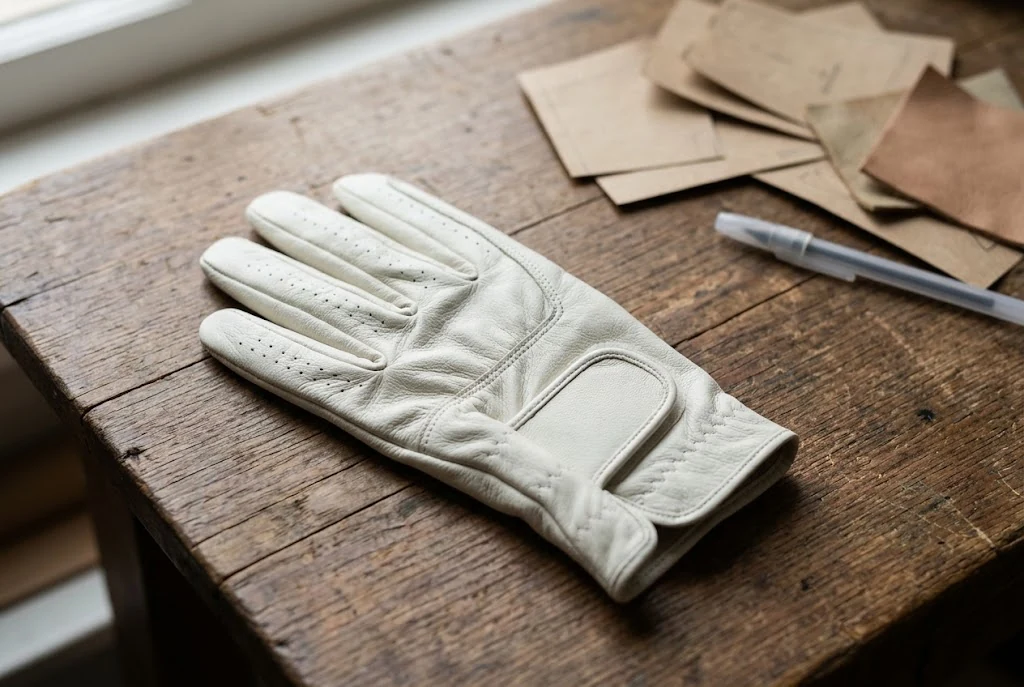
A golf glove bill of materials, or BOM, records the materials and components that belong to one identified product version. For a brand, its main value is connecting each panel, trim and packaging item to an agreed reference. It is part of a manufacturing specification, not a substitute for drawings, fit measurements or a physical approved sample.
Define the product version before listing materials
Start with the style, colour, fit range and revision the BOM describes. A list headed “our golf glove” can accidentally mix materials from an early sample, the intended launch version and a later alternative.
Techpacker’s material-table documentation describes a BOM section as a record of material and component types, including trims, labels and packaging. For a glove, adapt that structure around the actual product rather than copying a clothing template with irrelevant fields.
The tech-pack guide covers the wider brief. This article focuses on the component register within it: what goes where, how it is identified and whether it is approved.
Connect material rows to a panel map
Use labelled back, palm, thumb and closure views. Give each relevant component a stable reference that appears in the material table. If one material is used in several places, show those locations rather than relying on a colour in the drawing alone.
Texpak works with Cabretta leather, synthetic leather and synthetic suede. Some approved designs combine materials or use stretch inserts. “Leather glove” does not tell the manufacturer which panels use leather or which construction the brand intends.
Our hybrid glove guide explains why panel choice matters. In the BOM, record the agreed choice without turning it into an unmeasured performance claim. A stretch insert’s presence does not establish a particular fibre content or percentage extension.
Give each component a usable row
The following fields form a starting structure. Ask the manufacturer which further details are needed for your glove and which are controlled in its production records.
| Field | Example of the information to agree |
|---|---|
| Component reference | A stable code connected to the drawing. |
| Location and role | Palm, back panel, identified insert, closure or packaging item. |
| Material or component specification | The confirmed type and relevant grade or construction reference. |
| Colour and finish | The agreed physical reference and any applicable colour-system reference. |
| Dimensions or properties | Only the measurements or requirements actually agreed for that component. |
| Approved reference | Swatch, sample, artwork or supplier reference where applicable. |
| Status and revision | Proposed, under review, approved or replaced. |
Include decoration and labels as identified items rather than a note saying “add our logo.” Link to the accepted artwork version. Keep proposed alternatives in separate rows or records so they cannot be mistaken for approved substitutions.
Leave unknown technical details as questions
A new brand may not know a synthetic material’s exact composition, a trim’s construction or production consumption. Do not fill those gaps with plausible numbers. Ask what can be confirmed and which records are appropriate to share.
Likewise, a thickness entry needs units and an agreed range or reference. Texpak commonly works with glove leather around 0.4–0.5 mm, with other requested specifications discussed during development. That is background about the team’s work, not a reason to copy one value into every component of your design.
Consumption per glove, cutting allowance and purchasing quantities should be confirmed by the responsible manufacturing team. A brand’s component list does not establish production yield. Keep the technical and commercial records connected without inventing a factory calculation.
Review substitutions against the complete glove
If a material changes, identify the affected component rows and ask which sample reviews must be repeated. Similar colour or texture is not enough to show an alternative behaves the same in the finished construction.
Texpak retains approved master samples for comparison. Use the BOM alongside that physical reference. A master identifies what was approved; the component record helps explain the construction behind it. Our sample-revision guide covers feedback when a development change is needed.
Synthetic availability can also change. The discontinued-material guide explains how to review alternatives. Do not leave a proposed replacement hidden in an email while the BOM still names the original.
Carry the same product identity into presentation
Add the agreed packaging items or connect a separate packaging component record to the glove revision. Check that material wording, size labels and wearing-hand details correspond to the finished product. The packaging guide covers the customer-facing review.
If you have a concept but no complete component list, discuss your glove design with Texpak. Mark the materials and features you know, and identify where you need recommendations. The team can help develop the specification; an honest list of open questions is more useful than a complete-looking BOM built from guesses.