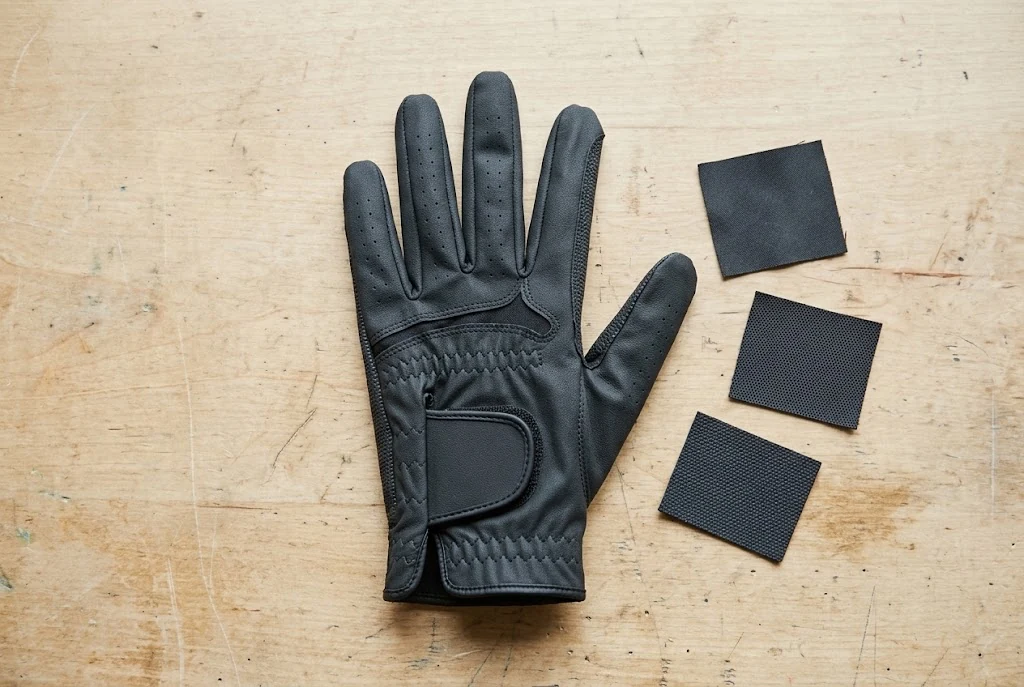
When a synthetic golf glove material is discontinued, identify the affected construction, assess alternatives in a finished sample and approve a traceable replacement before ordering. Then review stock, retailer information and care guidance so customers are told about the product they will actually receive.
Confirm the supply problem before choosing a substitute
A discontinued synthetic material does not automatically require a glove brand to abandon the style. It does require a new product decision. Confirm exactly which material is unavailable, whether any identified stock remains and which future orders are affected before assessing alternatives.
Texpak can discuss a similar material, or a customer can source and provide a material for assessment. An alternative still needs approval in the intended glove. A supplier's description or photograph cannot establish that a replacement will match every characteristic of the original.
Our repeat-order guide introduces material availability as one reorder question. Here the task is to manage the replacement from physical comparison through to stock and customer information.
Identify what mattered in the original construction
Bring the approved glove and its specification into the discussion. Identify the unavailable material's supplier reference where known, its position in the glove and the characteristics the brand needs to preserve.
Be specific about the problem an alternative must solve. Is the priority the palm's surface feel, the way a back panel moves, the visible colour, or the appearance of the finished print? Calling the requirement “same quality” does not tell the development team which differences matter most.
Separate material identity from product identity. A glove can combine several materials, and the discontinued component may affect only one panel. The hybrid glove guide helps locate the change without reopening unrelated parts of the design.
Compare a finished replacement sample
Review candidate materials, then examine the chosen candidate in the assembled glove. A swatch cannot show how the revised construction sits on a hand or how the closure behaves when the glove is fastened.
For a meaningful comparison, record other changes made between samples. If the pattern and material both change, a different fit cannot be attributed to the material alone. Start with suitable physical references and keep the reviewer, fit range, size and wearing hand identifiable.
| Review area | Question for the finished sample |
|---|---|
| Fit and movement | Does the identified sample meet the intended fit when tried on and fastened? |
| Surface and feel | Which differences are acceptable, and which require another candidate? |
| Construction | Are seams, panel joins and closure satisfactory in the revised glove? |
| Decoration | Is the agreed artwork acceptable on this material and finish? |
| Information | Which material descriptions, care instructions and claims need review? |
Use the wear-trial plan if ordinary-use feedback is needed. Agree any other checks for the revised construction. Do not carry a claimed lifespan, waterproof rating or performance percentage onto the replacement merely because its colour looks similar.
Approve the version you intend to sell
Write down the accepted differences and the exact reference that now describes the product. A proposed substitute becomes an approved specification only when the relevant decisions are complete; availability alone is not approval.
Texpak retains approved master samples for later production comparisons. Connect the replacement material and revised glove to an identified approval so the next order does not accidentally refer back to the discontinued version.
Confirm the quotation and schedule for the revised construction. Material sourcing, sample review and any changed decoration may affect the plan. Do not promise retailers a restock date by simply copying the timetable for the old material.
If your brand supplies the material, agree its identity, usable quantity, delivery arrangement and assessment before relying on it for the order. Customer sourcing is an option to discuss, not proof that any supplied roll will be suitable for the finished glove.
Plan the handover between old and new stock
Consider a fictional brand with approved original stock still at a retailer and a replacement construction planned for its next run. It needs to know which version each location holds and what a repeat customer will receive. This is a planning example, not a report of a Texpak customer.
Keep the versions traceable in the product and receiving records. Decide whether they can be presented as one continuing style or need visibly different naming or identifiers based on the actual differences and retailer requirements. Check the identification arrangements with sales partners rather than assuming one barcode decision suits every change.
Tell the retailer what has changed before revised stock arrives. If a buyer is approving one construction and receiving another, a quiet supplier substitution has become a customer-information problem. Keep receiving checks connected to the correct new reference.
Update product information without erasing the earlier product
Review photographs, material wording, care information, packaging and sales documents together. A new palm material can make an old close-up or complete-glove description misleading even when the style name stays the same.
Keep relevant help available for customers who already own the original version. The care-card guide explains why the instruction should stay tied to the actual construction. Refresh the product page from the approved replacement record rather than assuming every earlier statement still applies.
Discuss the unavailable material and your approved glove reference with Texpak. Explain which characteristics your brand wants to retain and where the product is sold, so the alternative can be assessed as a complete glove and introduced with clear information.