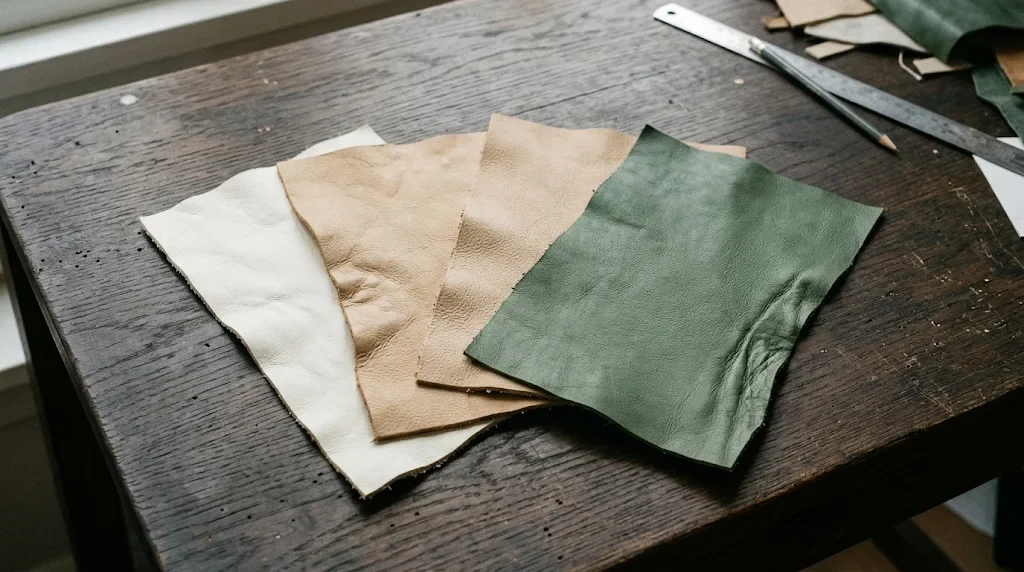
An Estonian coastal collection can draw on colours and textures seen around links golf. The buyer’s work is to turn that direction into a usable material and colour brief. Start with the physical references and check how they appear on the assembled glove.
Choose the colours the finished glove needs to carry
Pärnu Bay Golf Links presents a links course, a shorter format and a practice range near Pärnu. It gives a concrete setting for an independently designed coastal collection. Use your own reference imagery and brand marks. A location can provide visual context without supplying artwork rights or indicating a commercial relationship. Pärnu Bay Golf Links.
Pick two or three useful colour roles before commissioning a rendered design. A fictional collection might use a pale base, a darker closure and a muted accent on a small mark. Label the role of each colour. A screen image of dune grass can guide the design conversation. A physical reference shows the manufacturer which shade the team is meant to evaluate.
Review the same shade on the materials actually proposed
Record which components use Cabretta, synthetic leather or another agreed material. A base panel and a strap trim may take a colour differently, so keep their proofs identifiable. Review the separate swatches and the finished glove. See whether the accent competes with the logo or becomes hard to distinguish when the strap is fastened.
Compare samples under agreed lighting and save the accepted physical reference. If the brand wants a matched set, ask which visible differences the team should review before production. Natural leather can show slight batch variation, and the buyer and manufacturer should agree how the approved colour is assessed. The leather batch variation guide gives the relevant context.
Resolve what happens when an accent crosses a seam
Print the layout at glove scale. Mark whether an element must align across a join or can end before it. A very small detail can look clear in a design deck and become crowded on the actual closure. Ask the sample maker to propose a workable position, then compare it on the intended size and worn hand.
Before approving a second colourway, lay both finished samples beside their retail sleeves. Check whether staff can identify the correct colour from the pack and whether the two versions still need different trim references. A small visual change can carry stock consequences even if the silhouette and logo remain the same.
Keep the approved colour reference, component map and artwork version together. A revision to one trim can affect a later reorder, so include it in the order record as well as the design file. The logo proof guide and bill of materials guide help capture both parts. Bring the physical references and the desired feel to Texpak to discuss a realistic sample.
Related guide for Estonia · Funding a Golf Glove Discount for Estonian Green Card Courses