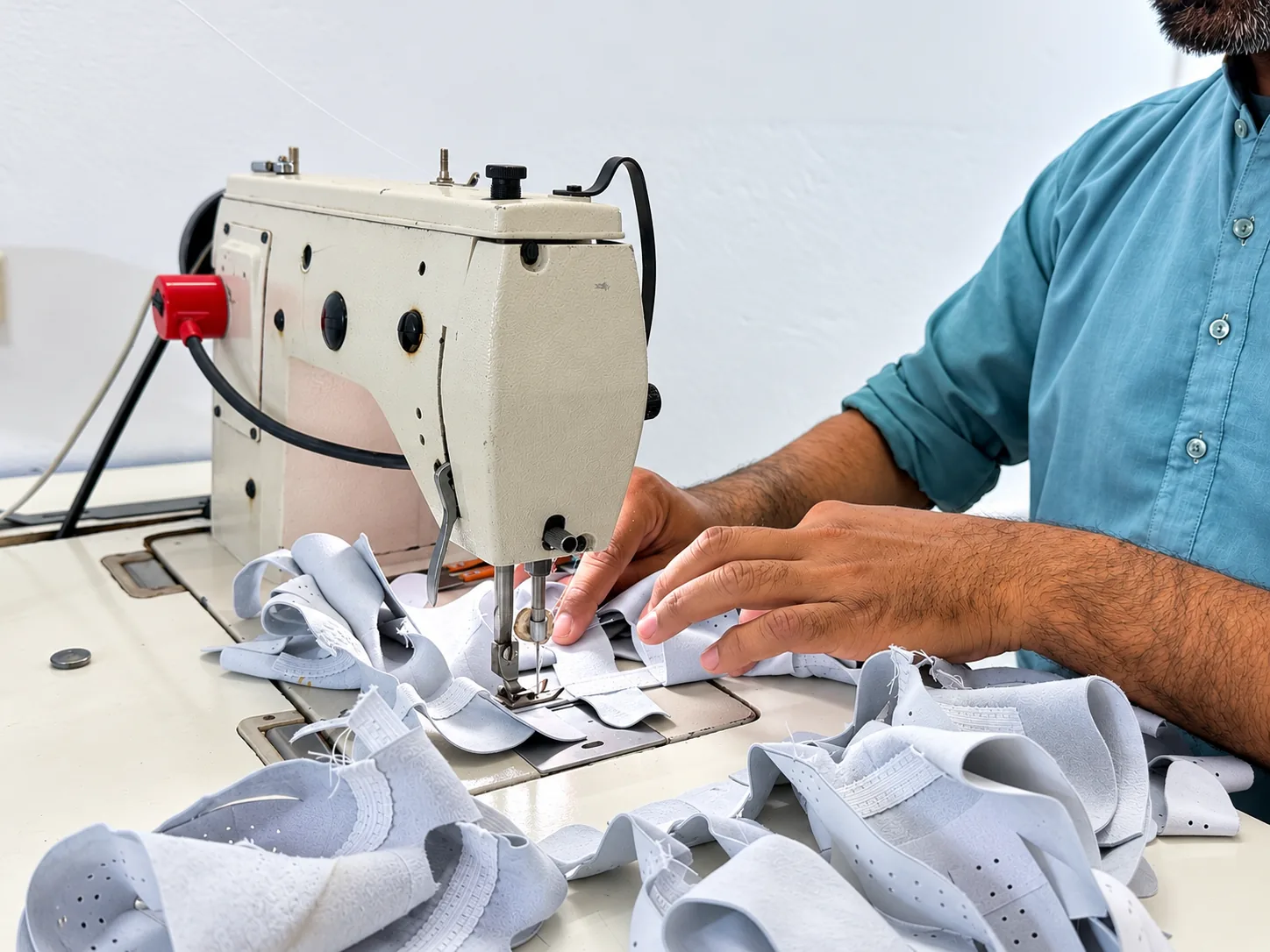

To verify a golf glove manufacturer, connect the business you are speaking to with its production site, the sample it supplies and the company named on your order documents. Ask to inspect the operations relevant to your project and keep a record of what was checked. A professional website, a photograph or a certificate can contribute evidence, but each needs context.
Connect the business identity to the proposed order
For a new golf brand, sending a design overseas can feel like the start of a relationship with people you have never met. Texpak’s team hears concerns from prospects who have experienced scams or heard about them from other buyers. Asking how to verify a supplier is a reasonable part of preparing an order.
Record the business name, factory location, responsible contact and the identity appearing on the quotation and invoice. Ask the supplier to explain any difference between a trading name, manufacturing entity and payment recipient before proceeding. Keep that explanation with the project records.
Compare these details across your documents and established contact channels. If new instructions suddenly arrive, confirm them through a contact route you already know. The aim is to resolve inconsistencies while you can still investigate them.
Ask to see the operations your glove needs
A general factory tour can be interesting without answering the important production questions. Begin with the glove you intend to order. Which material is being prepared? Where are cutting, stitching, printing and packing performed? Which steps are in-house, and which depend on another supplier?
Texpak’s tannery and glove-manufacturing operations are in Sialkot, Pakistan. Leather preparation, cutting and stitching are performed in-house. Texpak welcomes factory inspections and offers in-person buyer visits or scheduled live video tours. Agree the timing and scope directly with the team so the visit addresses your actual concerns. For a live tour, identify the operations and sample references you want to discuss in advance, then leave time to ask questions as the team shows the relevant work.
The manufacturing-process guide provides a useful sequence for that conversation. Ask how the stages connect to one identified sample. Respect other customers’ designs and private records; a productive inspection should explain the operation without exposing their information.
Prepare a short inspection brief
Decide what you need to establish before arranging access. Identity, manufacturing capability, the quality of a proposed sample and workplace practices are related questions with different evidence needs. Give your inspector or supplier a clear brief instead of expecting one tour to settle everything.
| Question | Useful evidence to discuss | Record afterwards |
|---|---|---|
| Who is making the glove? | Business/site identity and the production steps relevant to the order. | What was seen or independently checked. |
| Can the sample be repeated? | Approved sample identification, specification and production comparison process. | Reference version and any unresolved differences. |
| What quality checks apply? | Agreed material, print and workmanship checks, with their scope. | Available records and remaining evidence requests. |
| What does a document establish? | Issuing body, covered organisation/site, scope and current status. | How the document was verified. |
For example, a fictional brand may want to confirm that a proposed leather glove can be made from an identified reference. Its brief would focus on the sample, specification and relevant production steps. A buyer seeking a social audit would need an appropriately scoped assessment, with the right auditor and access arrangements.
Check certificates and audit descriptions precisely
Request the current documents rather than relying on a small logo in a sales presentation. Texpak’s existing public compliance information identifies ISO 9001, ISO 14001 and ISO 45001 management-system certifications. Buyers can ask for the relevant current scope and issuer details as part of their verification.
ISO explains that external bodies perform certification and provides guidance for checking certification status. Match the document to the organisation and operations you are evaluating; avoid treating it as proof of every product-performance claim.
Also distinguish Sedex membership and SMETA auditing from certification. Sedex describes SMETA as an audit methodology that supports assessment and improvement, rather than a certification. Texpak has a Sedex SMETA audit booked for late November 2026, according to the team’s November 3 update. The audit is scheduled rather than completed. Ask the team for its current status and, once available, the relevant audit documentation for your buyer requirements.
Evaluate the sample and commercial details separately
Once you have checked who you are dealing with, assess the glove against your own brief. Material feel, fit, artwork and workmanship still need a physical review. The supplier scorecard helps compare those findings, while the quality-control guide covers questions about production checks.
Clarify what the shipping quotation includes and which payment methods are currently available. Texpak regularly receives questions about payment methods, including PayPal. Pakistan is absent from PayPal’s current country selector, checked on November 3, 2026. Texpak offers bank/wire transfers and ACH options, with Payoneer transfers available for small or sample orders. Confirm the applicable route, currency and instructions for your particular order. Payment-service availability alone does not establish a supplier’s legitimacy; examine the business, transaction documents and proposed arrangement together. Ask the relevant provider about any protections and exclusions that apply to the proposed transaction. Our overseas payment checklist gives a separate workflow for checking the invoice, recipient and any changed transfer instructions.
Finish with a record of answered and unanswered questions
Write down who performed the checks, when they took place, what they covered and what remains open. Ask for clarification on specific gaps. This gives your first-order decision a stronger basis than an informal impression that the factory looked busy.
To discuss a Texpak project, send your proposed glove brief and factory-verification questions. Explain whether your priority is confirming the operation, assessing the product or meeting a particular buyer requirement. That helps the team arrange a relevant conversation and inspection scope.