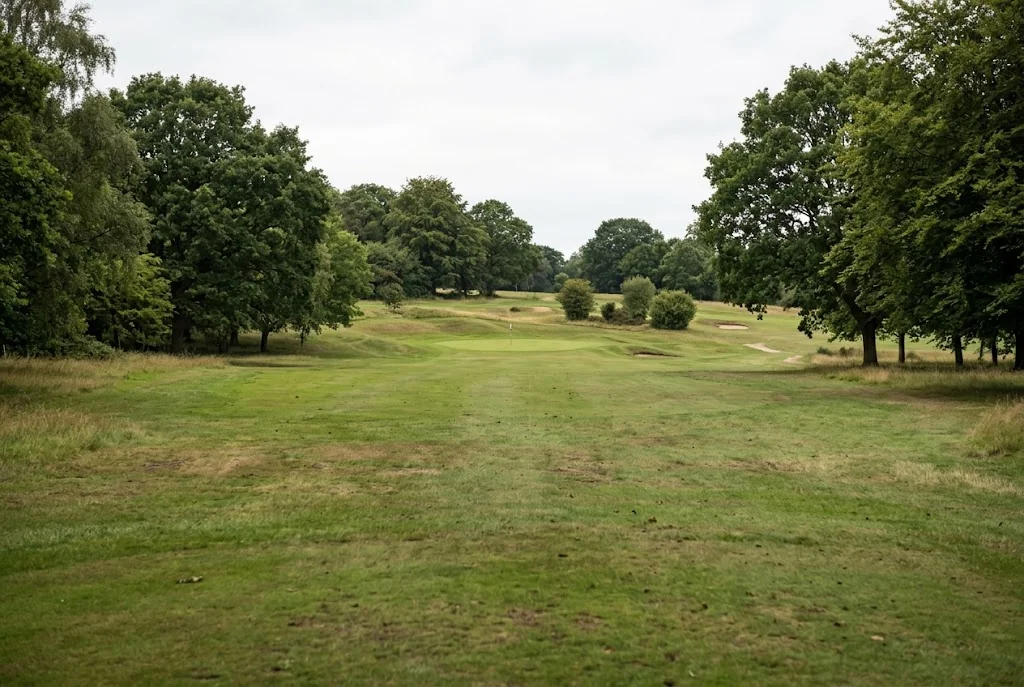
A shotgun start sends groups from different assigned holes at a common starting time. Sequential tee times send groups off at intervals, commonly from the first tee. Both can be used with different scoring formats, so “shotgun” does not tell you whether the event is a scramble, Stableford or individual stroke play.
Compare the starting arrangements
The R&A's pace-of-play management manual describes shotgun starts as simultaneous departures from multiple tees. They can suit events that want participants back for a shared function, provided the course and movement of players are organised carefully.
| Question | Shotgun start | Sequential tee times |
|---|---|---|
| Where does the group start? | Its assigned hole | The nominated starting tee, often hole 1 |
| When does the group begin? | The common scheduled start, following event instructions | Its individual allocated starting time |
| What must players locate? | Their group and starting hole | The meeting point and starting tee |
| What scoring format applies? | Whatever the event specifies | Whatever the event specifies |
Some events use a two-tee start or modified arrangement. Read the instructions rather than treating the word “shotgun” as a complete event plan.
Your starting hole changes the order, not the number of holes
For a simple fictional 18-hole example, a group starting on hole 6 plays holes 6 through 18, then 1 through 5. Hole 5 is its final hole. A group starting on hole 1 would normally finish on 18. Record scores against the printed hole numbers, even when your personal first hole is not number 1.
The scorecard guide explains those columns. Avoid entering your first score in the hole-1 box merely because it was your first shot of the day.
If two groups have the same starting hole with A and B labels, follow the starter's directions about order and spacing. Golf Genius's tournament-management documentation illustrates these assignments. A shared nominal start does not mean two groups can hit towards one another or tee off into the group ahead.
What a player should confirm before arriving
Check the registration time, briefing time, group, starting hole and transport arrangements. The advertised playing start is not the time to arrive at reception. An unfamiliar starting tee may be some distance from the clubhouse.
Keep the essentials accessible before the briefing: marked balls, tees, glove if you use one, water and scoring instructions. Our first-round checklist helps with equipment; the carry, trolley and buggy guide covers transport questions.
Ask how the venue will communicate a delay, suspension or change. Do not infer that any horn means the same thing at every event. Follow the venue's briefing and official directions.
A shotgun start is not a scramble
A starting arrangement and a scoring format answer different questions. A scramble determines how a team selects and plays shots. Stableford determines points from hole scores. Match play compares holes between opponents. A shotgun assignment merely distributes groups around the course at the start.
Use the relevant guide before the event: scramble versus best ball, Stableford scoring or match play versus stroke play. Ask how handicaps, team scores and returned cards will be handled for this particular outing.
Starting together also does not guarantee an identical finish time. Groups still have to complete their holes safely and maintain the agreed pace. Treat any shared meal or prize-giving time as part of the organiser's plan, not a reason to rush unsafe shots.
For organisers: issue a usable starting brief
A clear player message should state the date, arrival and briefing times, playing start, group, starting hole, transport instructions and scoring format. Identify the event contact and where changes will be announced. Test the message by asking whether a first-time guest could find the correct place without relying on a friend.
For example, a fictional message might distinguish registration at 08:00, briefing at 08:30 and a 09:00 playing start. These are illustrative times, not recommended universal intervals; the course must confirm its own movement and preparation needs.
Our corporate golf-day checklist covers the wider venue, guest and merchandise plan. Keep those arrangements aligned with the final starting sheet. The useful outcome is simple: every group knows where to go, when to be ready and how its round will be scored.