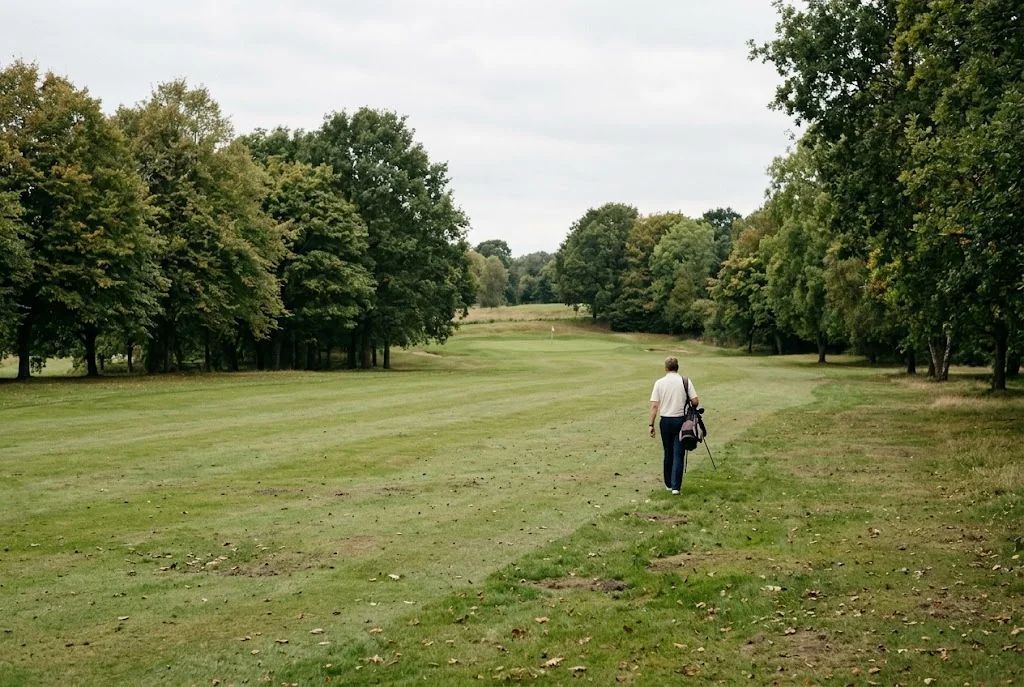
You can play golf alone where the venue permits it, but booking as a single player does not guarantee you will play without partners. The course may pair you with others or restrict single-player bookings. Confirm the arrangement before paying, and check handicap requirements separately if you want to return an acceptable score.
Ask what the single-player booking means
Tell the golf shop that you are booking one place and ask whether you may be paired with other players. If your preference is to play alone, state that preference and ask whether the venue can accommodate it.
An online time showing one available place may mean one space in an existing group. Equally, a blank-looking booking sheet does not establish that the course will leave the other places empty. Read the current booking conditions and contact the venue if the arrangement is unclear.
A first-time golfer should also ask about experience or handicap requirements for the intended course. Our range-versus-course guide helps distinguish an initial practice visit from a full round.
Check in with the starter even if you see an empty tee
Confirm your starting time, tees and grouping when you arrive. Do not move to a different tee or start early because the course appears quiet. Staff may be managing gaps, maintenance or players who are approaching out of sight.
Tell the starter if you are new to the course and ask how to follow the routing. Keep the current Local Rules and any course map accessible. A few minutes of orientation can prevent you walking towards the wrong next tee.
The first-round checklist covers equipment and arrival. A solo visit adds the need to confirm the arrangement directly rather than assuming another person in your group has already done so.
If you are paired, agree the practical details
Introduce yourself and say whether you are a beginner or unfamiliar with the course. Ask which tees each player intends to use and how the group is scoring. You do not have to imitate another person's equipment or expectations to join a considerate group.
Keep informal arrangements distinct from official scoring. A casual concession or replay should not silently become part of a competition or handicap return. Our mulligan-versus-provisional guide explains one common source of confusion.
In a competition, follow the Committee's group arrangements. Rule 5.4 deals with remaining in the assigned group during stroke play. Do not independently split away because you would prefer a solo round.
If you do play alone, respect the course's flow
You may reach a group ahead more quickly than a larger group would. Wait safely and follow the venue's procedure for playing through. Do not hit towards occupied areas or assume being one player gives you permission to skip around the course.
A quiet fairway is also not an unrestricted practice ground. Ask what the venue permits, and keep any practice separate from the rules and conditions of the round you are playing. Repeated shots should not damage the course or delay other players.
Keep track of your own equipment and follow the venue's weather and emergency instructions. Our etiquette guide explains safety, consideration and course care that still apply when you have no playing partner.
Can a solo round count for your handicap?
Do not assume that entering a number in an app makes the score acceptable. The USGA's score-acceptability guidance includes playing in the presence of at least one other person, in an authorised format and under the Rules, on an appropriately rated course during its active season.
Booking as a single and playing entirely alone are different situations. If you are paired with someone, you still need to satisfy the relevant score and verification requirements. Check your authorised handicap service before the round about registration, formats and any marker requirements applicable to where you play.
Our travelling handicap guide explains the distinction between playing a competition and returning a score. Keep a personal practice record if useful, but do not present it as an acceptable handicap score without meeting the requirements.
Before confirming a solo visit
- Ask whether single-player bookings are accepted at the intended time.
- Confirm whether pairing is possible or expected.
- Check course-entry requirements and the tees you may use.
- Reserve any clubs, trolley or buggy separately where needed.
- Ask how the starter wants solo players to handle gaps and playing through.
- Check score-acceptability requirements before starting if handicapping matters.
For equipment transport, use our carry, trolley and buggy guide. A successful solo booking starts with matching your expectations to the venue's arrangements, whether the result is a quiet individual round or a place alongside new playing partners.