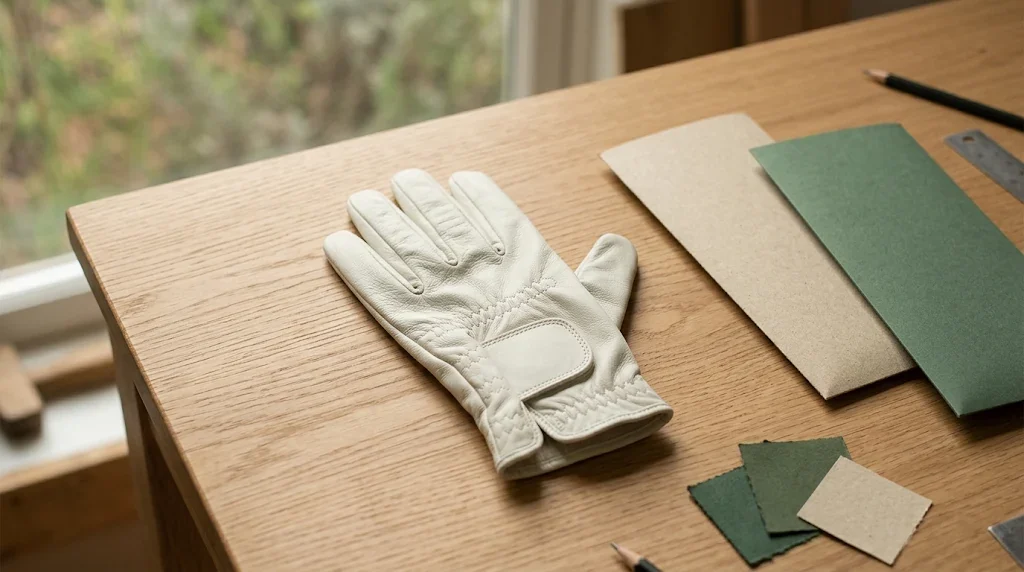
A Luxembourg golf glove package needs to identify the same product in every supported language. Keep size, fit cut and the actual wearing hand visible, then test the wording with the people who will use it.
Start with the customer conversation
Kikuoka’s Luxembourg academy lists coaches who work in different combinations of languages, including English, German, French and Luxembourgish. That gives a concrete example of a golf setting where staff and customers may use different terminology for the same equipment. Ask your own retail partner which conversations need support before deciding which languages belong on its glove pack. Kikuoka Golf Academy language information.
Write the approved product facts before translating. Include material by relevant panel, fit cut, size, wearing hand and the care instruction agreed for that construction. Keep the style and variant identifiers stable across the package, stock file and product page.
Choose where each field belongs
Put the selection information where a customer can see it on the display. A longer care explanation can go inside the package or on a linked page if that suits the project’s requirements. Ask the local seller to confirm any information that must appear directly on the package. A small sleeve can still have a readable hierarchy when the buyer makes those decisions before artwork approval.
For example, a fictional Luxembourg range could use one prominent left-hand identifier and put its longer material and care explanations on an insert. Someone who uses another language should still be able to point to the exact variant without changing the stock code.
Run a counter proof with the sample inside
Give a colleague the finished package and a requested variant. Ask them to find the wearing hand, fit cut and size, then read back the material description. Repeat with another language. If a label leaves either person unsure whether “left” describes swing side or glove side, revise the wording before approving the art.
Check the translation against the physical glove. A short description can lose the difference between a leather palm and an entirely leather construction. Our localisation guide covers the source record, while the packaging guide helps with proof and display decisions.
Keep the accepted proof with the order
Read the print proof where the glove will be sold. A label that looks clear at full size on a screen can be hard to distinguish when the packages hang close together. Put an example of each fit and hand on the display, then ask the local team to pick a requested variant without opening it. If one term needs a longer translation, check whether it still fits the label and whether any shortening obscures the product. Record which language versions each reviewer actually checked and carry that proof reference into the production brief.
Record the artwork revision, language check and physical sample reference in the same approval. Give the receiving team a copy of the final variant labels. Share your Luxembourg glove and packaging brief with Texpak with the required languages, format, identified materials and intended retail arrangement.
Related guide for Luxembourg · Shared Golf Glove Fitting Sets for Luxembourg Club Shops
Explore Texpak’s private-label golf glove manufacturing for materials, sampling and production options.