
Links, parkland and desert describe different golf-course landscapes, rather than three sets of playing rules. Links are associated with coastal sandy ground and open terrain; parkland layouts often use an inland, tree-framed setting; desert courses place maintained golf areas within an arid landscape. For a visit, confirm the actual course, conditions and Local Rules instead of planning from the label alone.
What makes a links course different?
Traditional links golf is associated with the sandy ground between the sea and more developed inland land. Open terrain, dunes and relatively few trees can make the surroundings feel very different from an inland course. A coastal view alone, however, is not enough to establish every characteristic of a traditional links.
Do not turn the description into a weather forecast. Wind, ground condition and visibility depend on the particular day and venue. Ask what the course is like now rather than packing only for the version you saw in a summer photograph.
Golf in England's course-type guide also distinguishes links from other coastal and inland categories. Course names and marketing labels are useful clues, but not a complete classification or a promise of particular playing conditions.
What should you expect from parkland golf?
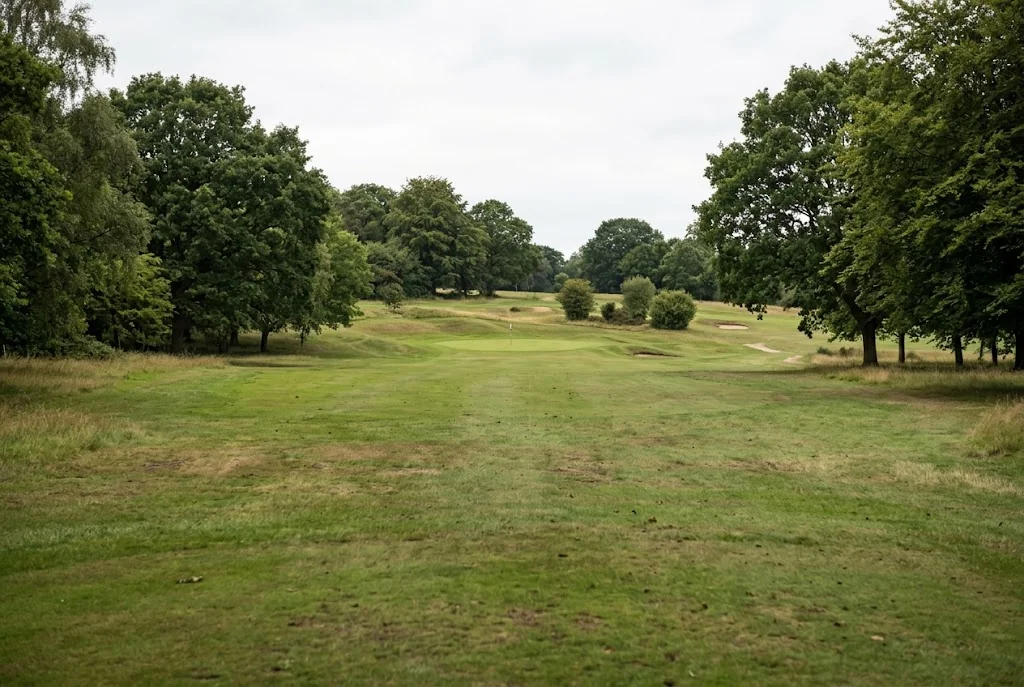
Parkland commonly describes an inland setting with grassed playing areas and trees framing parts of the layout. Trees may help you recognise separate corridors, but the label says little by itself about the width, length or difficulty of any individual hole.
For an actual example of the terminology, England Golf's course directory describes Addington Court's Championship course as tree-lined parkland. That is a description of a setting, not a reason to assume every parkland course has the same design.
Check drainage, current ground conditions and trolley or buggy restrictions with the venue. A sheltered-looking photograph does not guarantee a dry winter fairway, easy walking or protection from the weather throughout the round.
How does a desert course change the surroundings?
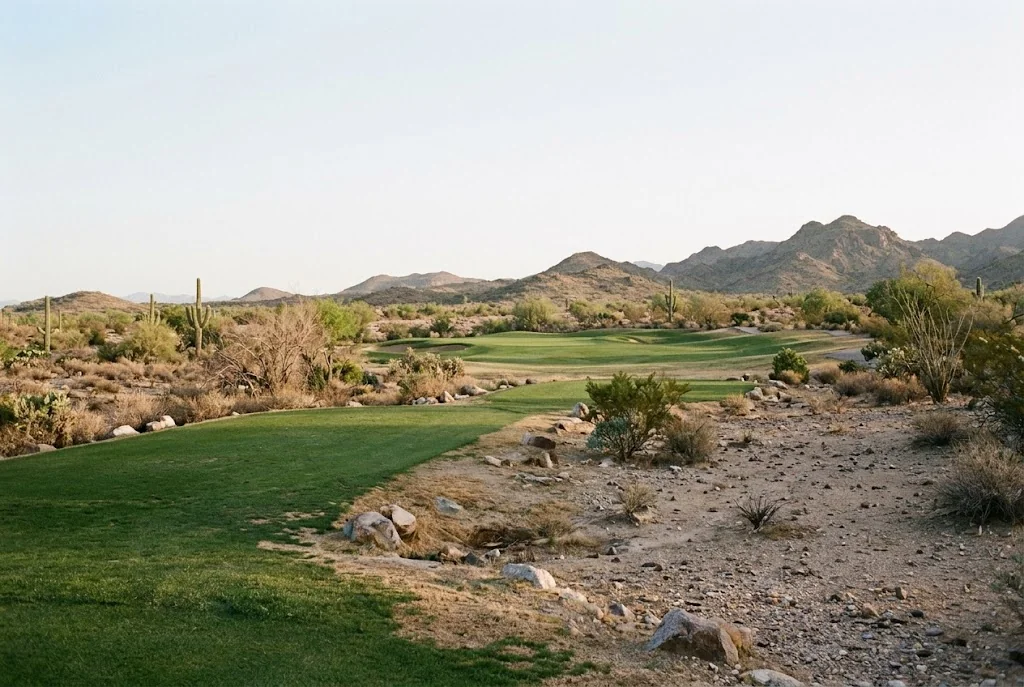
A desert layout places maintained tees, fairways and greens within an arid setting. The contrast between the intended playing corridor and surrounding native ground can be visually striking.
Troon Country Club describes its course as integrated with the Sonoran Desert. That named course is an example of the landscape, not the location of the generic photographs in this guide.
Ask about permitted routes, restricted areas and what to do if a ball enters native vegetation. Do not assume bare ground has the same status everywhere or enter an area that staff have told you to avoid. Follow the venue's current advice about conditions and supplies rather than assuming every desert destination is hot throughout the year.
Use the differences to ask better questions
| Setting | Visual starting point | Confirm before playing |
|---|---|---|
| Links | Open coastal ground, often with dunes and sandy terrain. | Current wind, ground conditions and course instructions. |
| Parkland | Inland grassed corridors, often framed by trees. | Ground conditions, routes and seasonal restrictions. |
| Desert | Maintained playing areas within an arid landscape. | Native-area access, permitted routes and local guidance. |
None of these labels replaces Course Rating, Slope Rating, par or tee choice. A short course in one setting can present a different challenge from a long course in the same category. Our scorecard guide and travelling handicap guide explain those separate numbers.
Read the Local Rules before interpreting the landscape
Appearance is not a ruling. A sandy-looking area is not automatically a bunker, and a dry-looking area is not automatically free of restrictions. Course boundaries, penalty areas and other defined areas depend on the applicable definitions and markings.
The R&A's Rule 2 explains the defined areas of the course. Read the venue's Local Rules and ask the starter about anything unclear. Use official guidance for a particular situation instead of guessing from a course-type label.
Plan equipment around the visit you actually booked
Confirm whether you are walking, using a trolley or hiring a buggy. Ask about rental clubs, access to water, suitable footwear and any current restrictions. Our course-transport guide helps organise that choice.
Choose clothing for the forecast and the venue's policy. A glove should fit properly and suit the conditions you expect; the words links or desert do not identify a special glove construction. The fit guide and weather-glove comparison cover those decisions.
Before leaving, identify the exact course and tees, check the latest conditions and confirm the arrival instructions. Understanding the landscape makes the visit easier to picture. Checking the actual venue makes the plan useful.