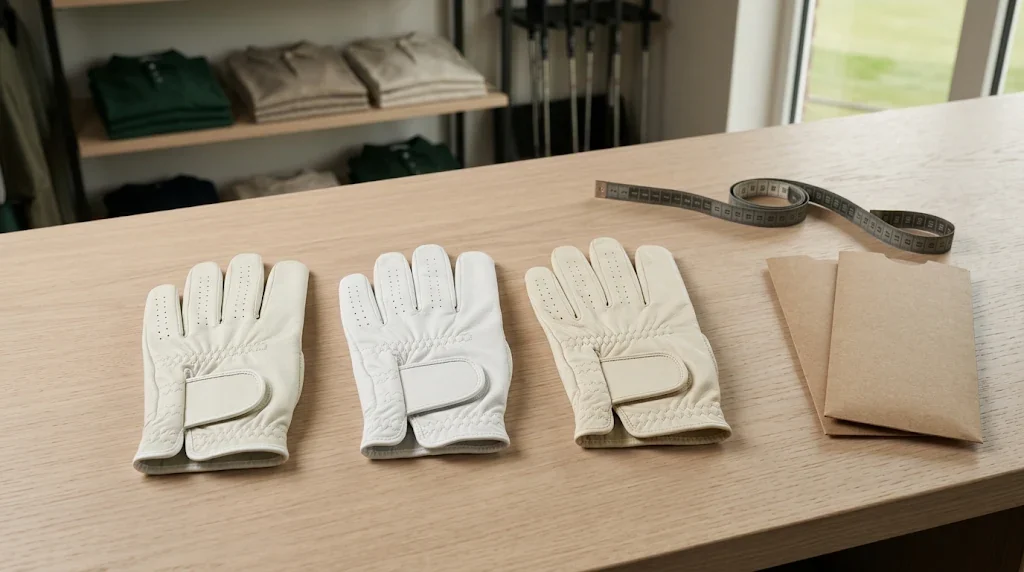
Before committing to a women’s range for several German shops, test the same identified samples with the intended customers. Record hand shape and fit observations alongside actual requests, then decide which sizes and cuts need another sample.
Use participation data to define the audience and shop evidence to define the stock
The German Golf League reported more than 227,000 registered women golfers in Germany for 2024, drawing on the European Golf Association’s participation report. In a separate release, the Deutscher Golf Verband reported more than 695,000 total registered memberships in its affiliated facilities at September 2025. These are dated measures of participation. The proposed glove range still needs evidence from the shops and golfers it will serve. German Golf League’s women’s participation report and DGV’s 2025 registration update.
Pick a small group of shops that serve the intended customers. Give each the same labelled sample references and a short fitting instruction. Ask staff to record the cut, size and worn hand, then note where the wearer notices an issue. Texpak can discuss women’s patterns and physical samples. Avoid assuming one wearer or one shop establishes the proportions needed throughout the range.
Look for a fit issue the shops can describe consistently
Imagine two fictional stores trial the same three sizes. One records five complaints that the medium feels “too big”. The other identifies three medium wearers who like the palm fit but have spare fingertip length. The second description gives a sample maker a clearer question. Ask the first store to record which areas felt large before combining the feedback.
Log available try-on pieces separately from requests for unavailable variants. A shop with only left-hand samples cannot report that right-hand customers rejected the fit. Record a genuine request and the missing sample. In the next pilot, include the appropriate wearing hand if you can obtain it and see whether the reported gap is a stock issue or a construction issue.
Expand the assortment after the samples and quantities agree
Compare the fit results with each shop’s proposed order by variant. A small number of repeated observations might justify a particular new cut or size. A large count of try-ons alone may only show that staff introduced the product well. Identify the expected sales channel, stock ownership and the current approval reference before quoting the combined programme.
Ask each outlet to return the samples with its notes at the end of the pilot. Check that the reference IDs still match and note which gloves have been handled often enough for their condition to change. That step helps the buyer avoid comparing feedback from different sample revisions under the same size label.
Use the size-set approval guide to plan the next sample review. Bring the anonymised shop observations, intended variants and destination to Texpak. Our first order assortment guide helps turn those findings into a practical allocation.
Related guide for Germany · Who Needs Golf Glove Packaging Data in Germany?