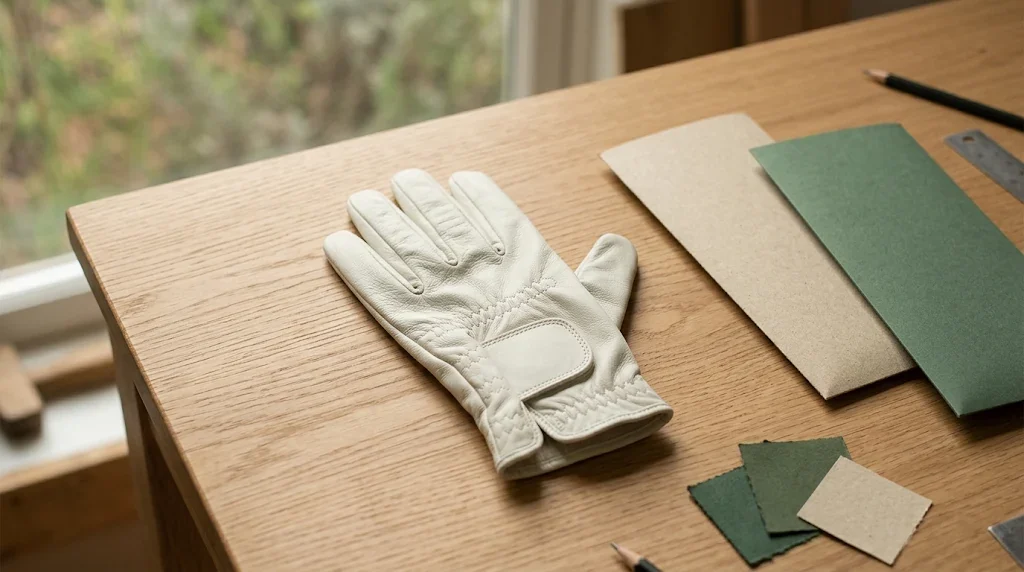
When a Belgian golf buyer serves Dutch and French retail channels, the artwork decision can affect how stock moves between shops. First decide whether a shared pack can carry the required information clearly. Then compare it with two language editions using the actual order split.
Ask each retail partner what its counter needs
The Royal Belgian Golf Federation describes Golf Vlaanderen and AFGolf as regional bodies alongside the national federation. AFGolf identifies its French-speaking club audience and Golf Vlaanderen’s Dutch-speaking one. This is a useful reason to involve the people selling the glove in both channels when preparing the pack. Ask each partner which information and languages they need for the actual selling area. Royal Belgian Golf Federation and AFGolf.
Build one product record before commissioning artwork. It should specify the material by panel, fit range, size, wearing hand, approved care wording and what is included. Give translators the physical sample or clear product views. A mistranslated wearing-hand label can misdirect the purchase even when both versions look polished.
Compare shared and split packs in stock terms
Imagine a fictional brand expecting to supply 90 gloves through one Dutch-speaking outlet and 60 through a French-speaking one. With two language-specific sleeves, a transfer of ten medium left-hand gloves depends on whether the receiving outlet accepts the other sleeve. A shared pack can keep those units transferable if both partners have approved it. These numbers describe store allocation, separate from any factory order minimum.
Mock up both options at actual size. Check the space for a readable size and hand label, product information and any buyer requirements for the destination. If the two-language version crowds those fields, a separate label or pack may suit the order better. Use a dummy pack at the actual counter and have staff identify the right variant before approval.
Give each printed version a proof owner
Record the approved text, artwork revision and which stock each version represents. Agree with the retail partners how they will identify variants and any packaging editions. Link them to the source product record so a material change updates both versions. Our localising product information guide covers that continuing maintenance.
Agree how to handle remaining sleeves if a wording correction changes only one language. If both outlets use one shared pack, the change affects the combined stock. Record which edition can still be sold and who approves its use. Keep the product identifier aligned with the finished glove and ask your retailer how it wants pack revisions tracked.
Send the two layouts, required quantities, destination and approved glove specification to Texpak’s OEM team for a feasibility discussion. Include the actual pack dimensions in the quotation request, since presentation can affect both production and shipping costs. The packaging guide gives the rest of the sample checklist.
Related guide for Belgium · Custom Golf Gloves for Belgian Interclub Teams