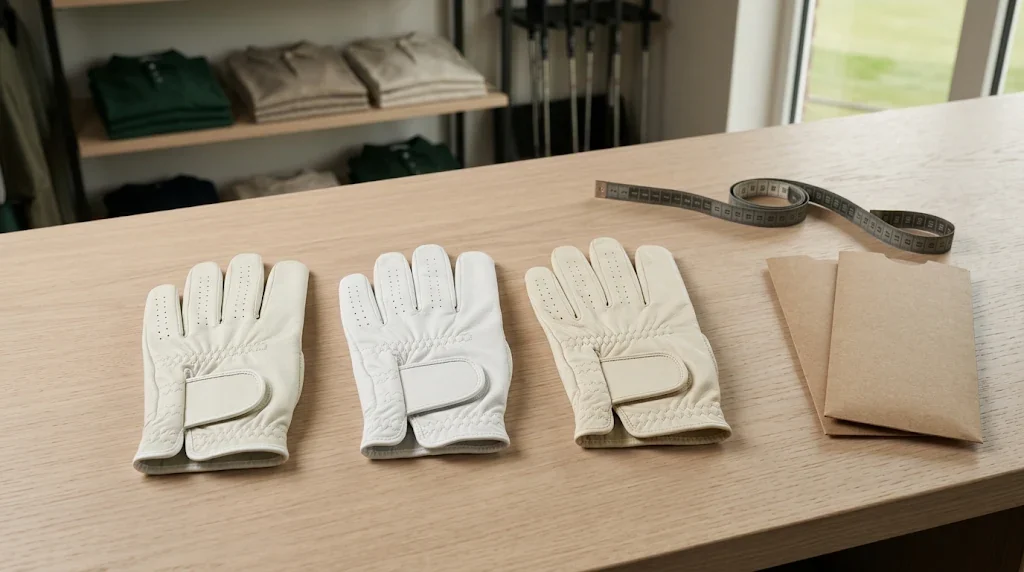
A Liechtenstein golf glove project can have more than one point of use. Decide where golfers try the glove, where they buy it and who holds the replacement stock before setting the assortment.
Separate the practice range from the course
The Golfverband Liechtenstein distinguishes the independent Schaan driving range from its official home course at Golf Club Gams-Werdenberg across the Swiss border. That arrangement gives a buyer a practical reason to map the journey between a practice location and the course. A product tried in one place can be needed again in another. Golfverband Liechtenstein membership information.
Start with the role of each site. A range may need a few identifiable try-on samples. The account responsible for retail may need sealed replacement gloves and a way to replenish them. Confirm what each participating business has actually agreed to handle before promising availability to players.
Give both locations the same fit record
Use a stable style code followed by size, cut and the hand wearing the glove. Write “worn on left hand” on the working record. A sample marked only “right-handed” can be interpreted as the player’s swing side or the product’s wearing hand. When golfers move between locations, one label should still identify the same product.
Keep the demonstration glove apart from sale stock. A well-used sample may stretch or lose its label, so decide who checks it against a current reference. The shop fitting workflow covers the customer conversation, while a shared product record keeps the two locations aligned.
Use actual requests to allocate the order
Suppose a fictional club project sees ten requests for one size at practice and four requests for the same size at the course counter. Those are fourteen requests, not automatically fourteen separate buyers. Before treating them as demand, check whether anyone asked at both locations and which purchases actually happened. Keep a simple tally with the site, variant and outcome.
Agree which business can move unopened stock, which location sends replenishment requests and who signs off the total. Use the first-order assortment guide to turn the evidence into a variant breakdown. A combined factory quantity can still be distributed to different locations after receipt.
Send the manufacturer one approved reference
Run a transfer rehearsal before the first order. Give the course-side contact the product and variant reference recorded at the range, then ask that person to locate the matching sealed unit. Next, ask the stockholder to confirm whether it could release a replacement to the course without reducing any preallocated stock. If either step requires an explanation by the buyer who created the record, tighten the label or allocation sheet. Assign one person to reconcile a transfer at both locations and one person to decide whether recurring requests justify a new sample or more stock.
Share the intended construction, sample and artwork references, variant quantities, packaging labels and confirmed destination. Treat each receiving address as a separate question unless your receiving partner has agreed to distribute from one point. Discuss a cross-border glove programme with Texpak once the stocking roles and approval owner are clear.
Related guide for Liechtenstein · Liechtenstein Golf Glove Import Quotes: Buyer Checklist
Explore Texpak’s private-label golf glove manufacturing for materials, sampling and production options.