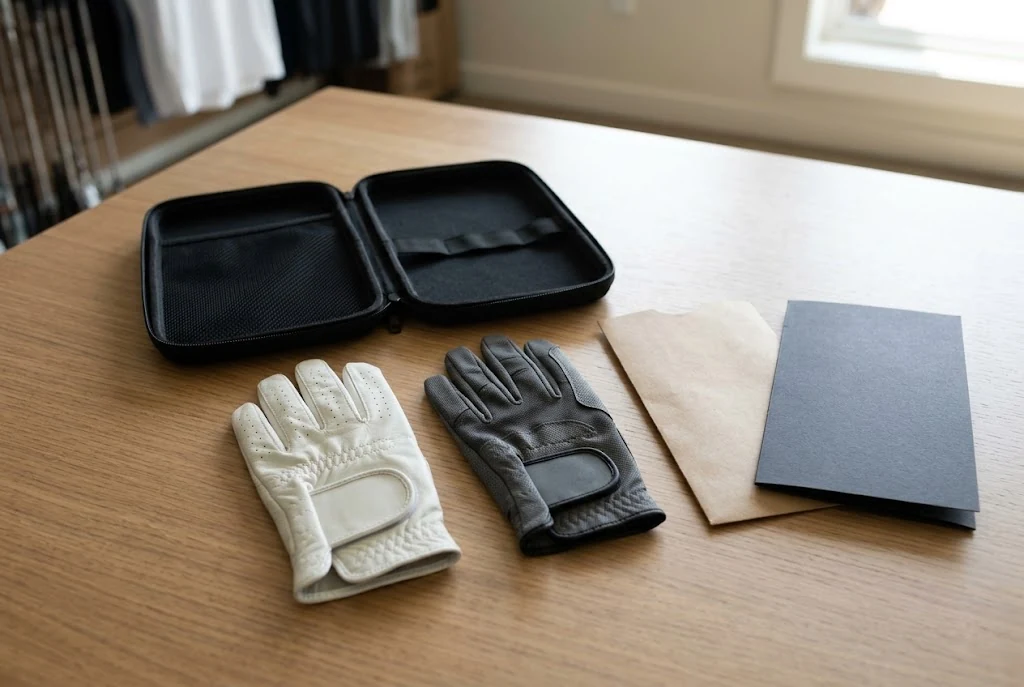
For a co-branded golf glove, establish each partner's permission and approval authority, then nominate one person to send the agreed production instruction. Separate approval of the marks, the finished glove and the launch materials. One partner approving its logo does not necessarily approve the complete collaboration.
Resolve permission before production artwork
A collaboration can involve an apparel brand, golf club, academy, artist or another partner. Identify which marks and artwork each party is entitled to supply and how the agreed permission applies to the proposed product. A file arriving in an email is not a complete explanation of the rights behind it.
WIPO's licensing guidance distinguishes permission to use intellectual property from a transfer of ownership. Its trademark discussion also highlights quality control. Apply those distinctions with appropriate advice when agreeing the collaboration; this article is a practical approval workflow, not a licence agreement.
Record the authorised product, markets, sales channels and any time or quantity limits the parties agree. Keep the actual agreement in private project records. The manufacturer needs usable instructions and evidence of authority, not an assumption that two visible logos settle the arrangement.
Make an approval map for the whole product
Start with decisions rather than job titles. Who supplies each final mark? Who approves its treatment? Who confirms the fit, materials and packaging? Who can resolve a conflict if the two visual identities do not work at the proposed scale?
| Decision | Record before sampling |
|---|---|
| Each brand mark | Correct file, permitted treatment and the partner authorised to approve it. |
| Combined layout | Position, dimensions and the person coordinating both approvals. |
| Product specification | Material, fit, construction and packaging decision-makers. |
| Final physical sample | The identified sample and approvals required from the relevant parties. |
| Production release | One contact transmitting the consolidated accepted instruction. |
| Launch assets | Who approves photographs, descriptions and the agreed collaboration wording. |
The coordinating contact does not need to own every decision. Their job is to ensure the factory receives one current answer rather than conflicting changes from several people.
Review both identities at the glove's actual scale
A balanced layout on a presentation slide can become crowded on a glove closure. Specify dimensions and review the fastened sample. Check that important details remain readable and that neither mark drifts into a seam or loses its intended relationship with the other.
Different sizes and wearing hands may change how the design is perceived. Identify which samples the partners need to review instead of assuming one flat drawing resolves every variant. Our artwork-approval checklist covers placement, scale and the physical sample.
If a layout must change for manufacturability, return the proposed change to the relevant approvers. Do not treat a factory suggestion as permission to alter a partner's identity. Keep accepted and rejected versions clearly distinguished.
Separate logo approval from product approval
Imagine a fictional collaboration between a clothing label and a club. The club approves its crest size, while the clothing label is still considering the glove material. The crest decision can be recorded, but the complete product remains unresolved. That distinction prevents a partial approval becoming an accidental production instruction.
Use plain status labels in your working record: approved for this identified sample, revision requested, or awaiting decision. Avoid an unexplained “looks good” beside a photograph. Record exactly what was assessed and which questions remain open.
Texpak sends physical samples and retains master references for production comparison. Connect the final collaboration approval to that sample, the current artwork and the written specification. Our tech-pack checklist helps organise those references.
Give launch materials their own check
The agreed product photograph, packaging and description should represent the same approved version. If a development image shows an earlier logo arrangement, withdraw it from the launch folder. Check collaboration wording too: do not imply an endorsement, exclusivity or technical claim beyond what the parties actually agreed.
Keep product claims tied to their evidence. A partner's strong reputation does not establish a specific wear-life or weather-performance result. Use the claims evidence guide for that separate task.
Send one complete manufacturing handoff
The handoff should identify the final product and artwork versions, physical sample, variant quantities, packaging and delivery arrangement. Include the coordinator and the route for any question requiring partner review. A later change should return through that route rather than bypassing one approver.
Discuss your co-branded glove project with Texpak once you can explain who is involved and which permissions and decisions are settled. We can help assess the construction and develop samples. Your partners' commercial and rights arrangements remain matters to agree explicitly, rather than assumptions carried by the phrase “collaboration”.